
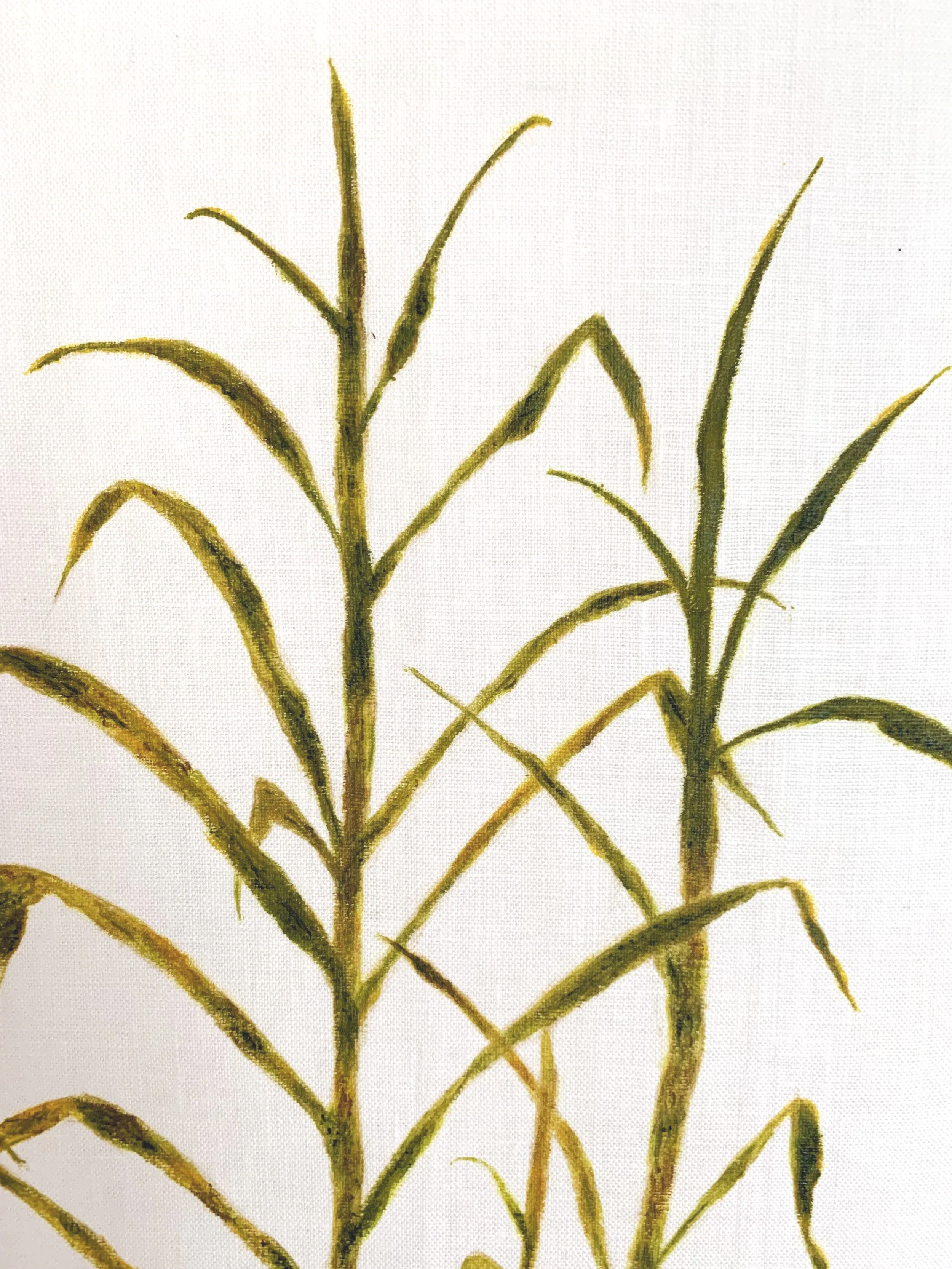
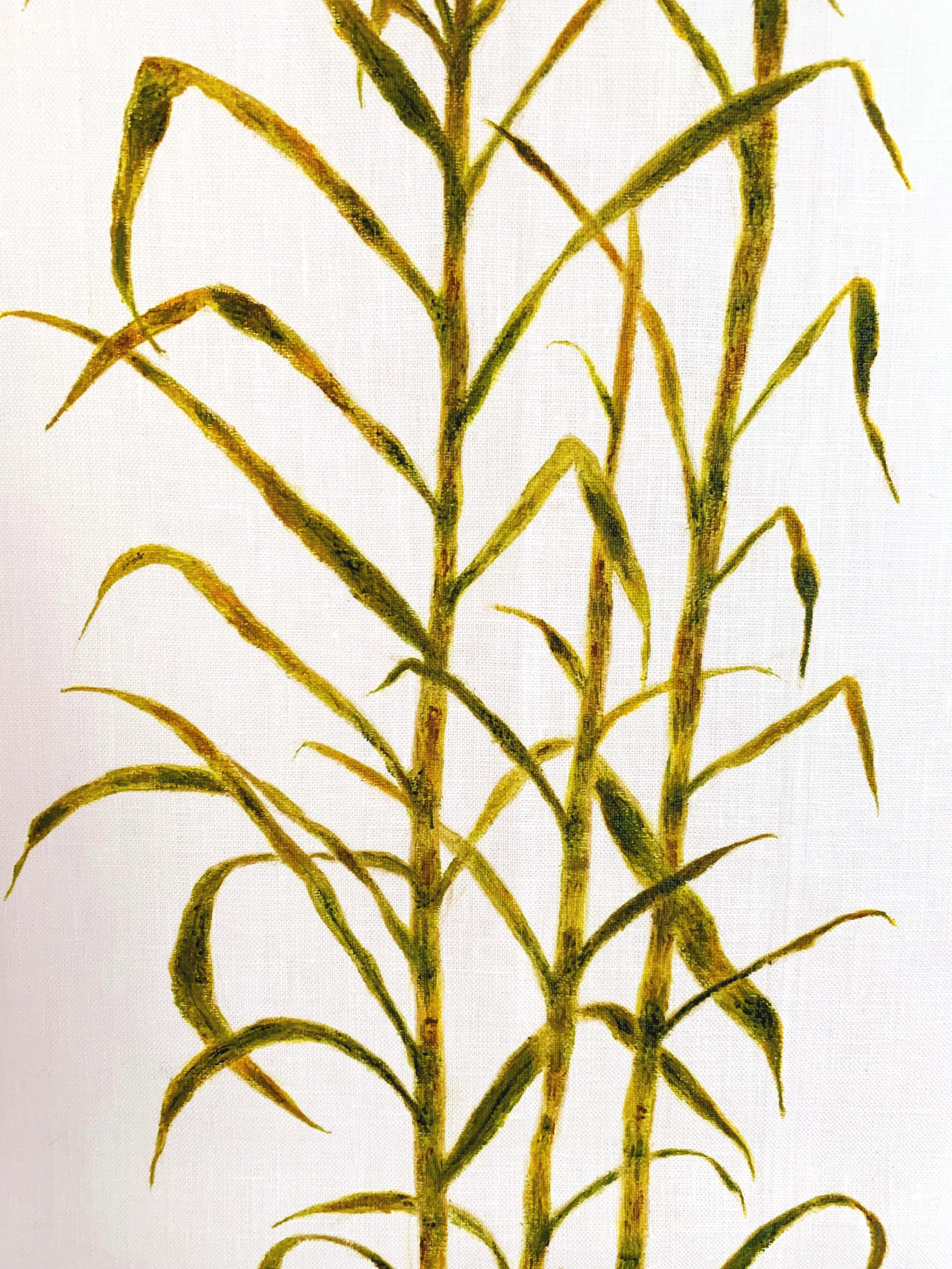
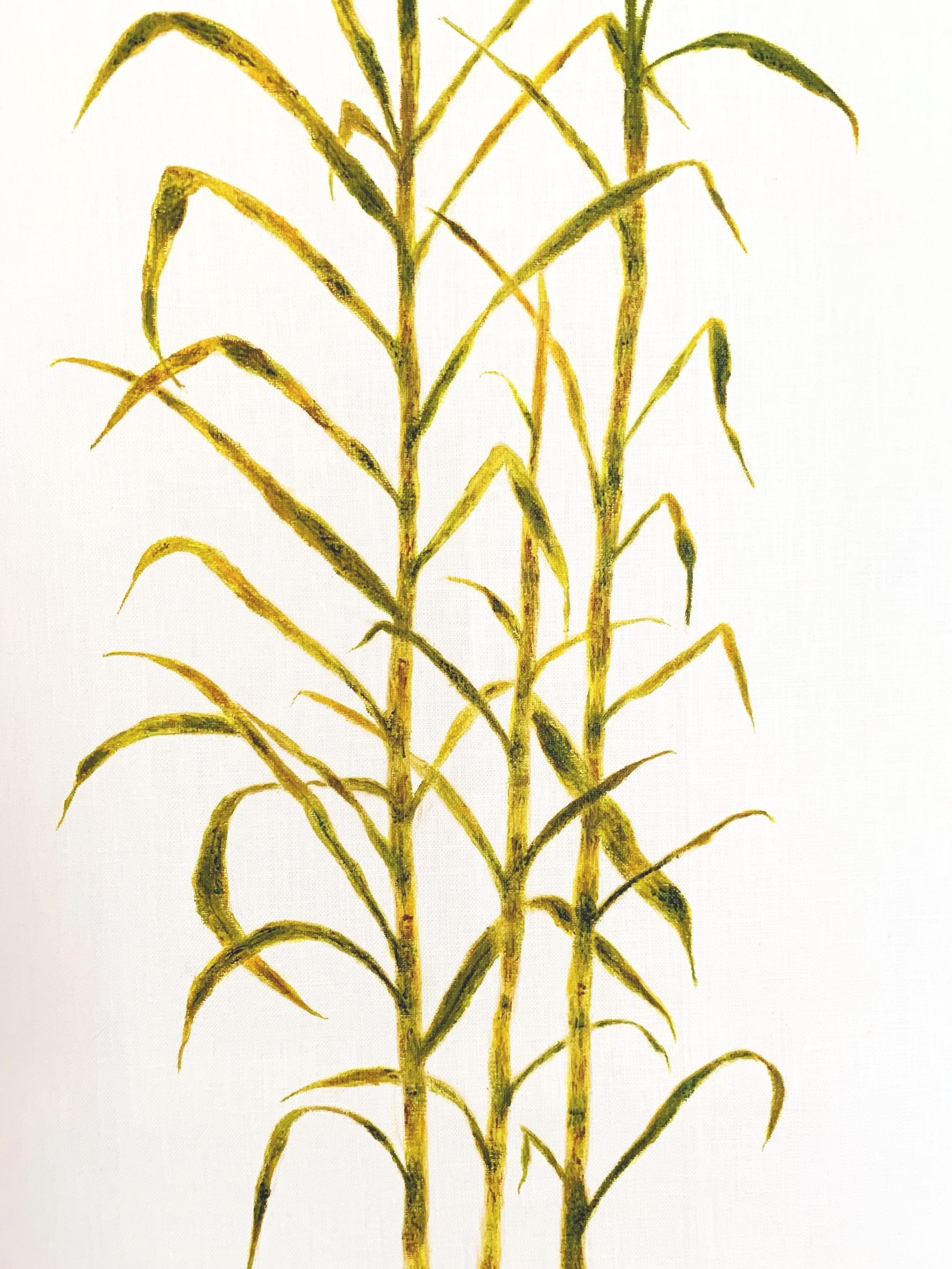
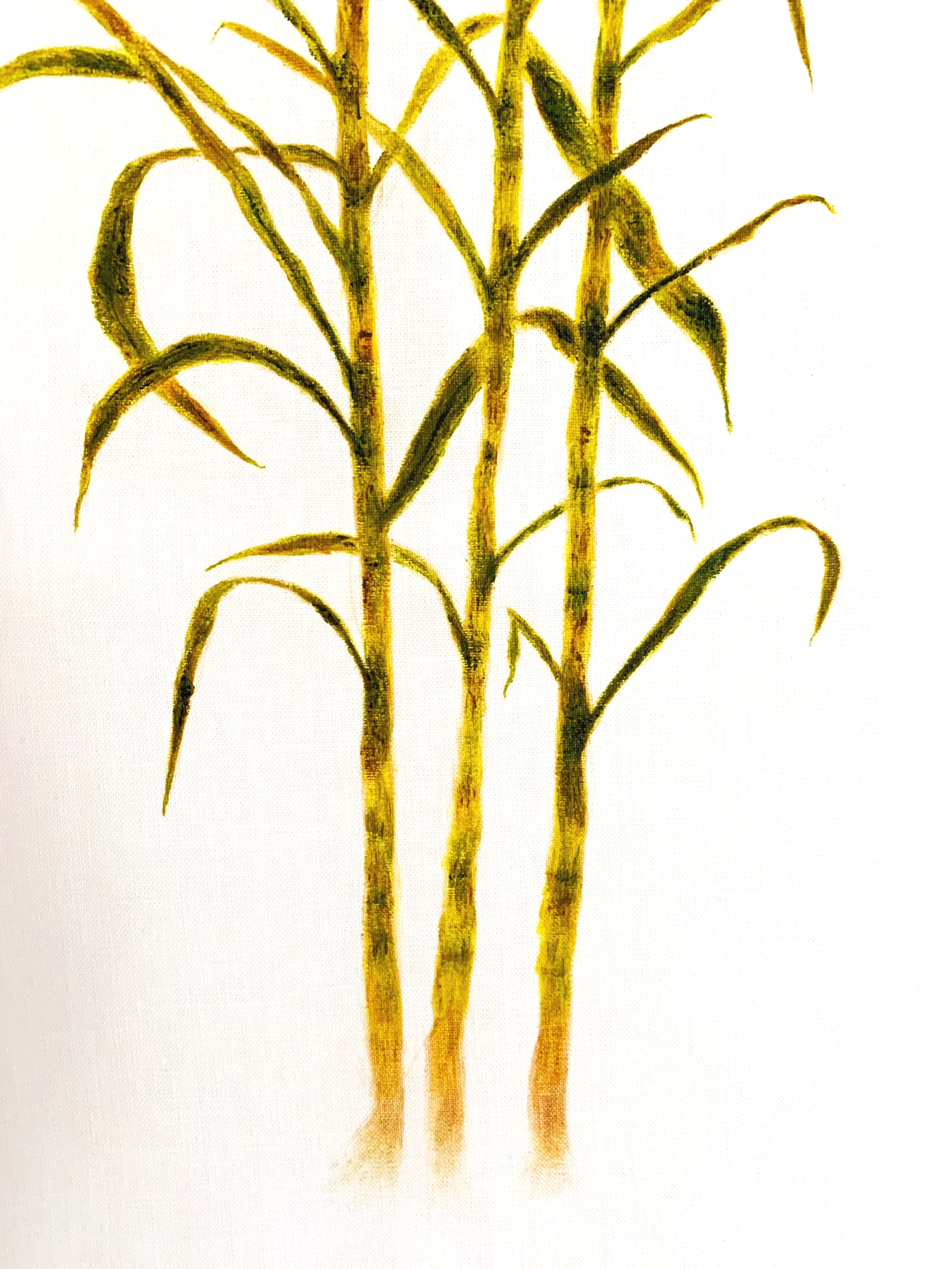
Sugarcane Series
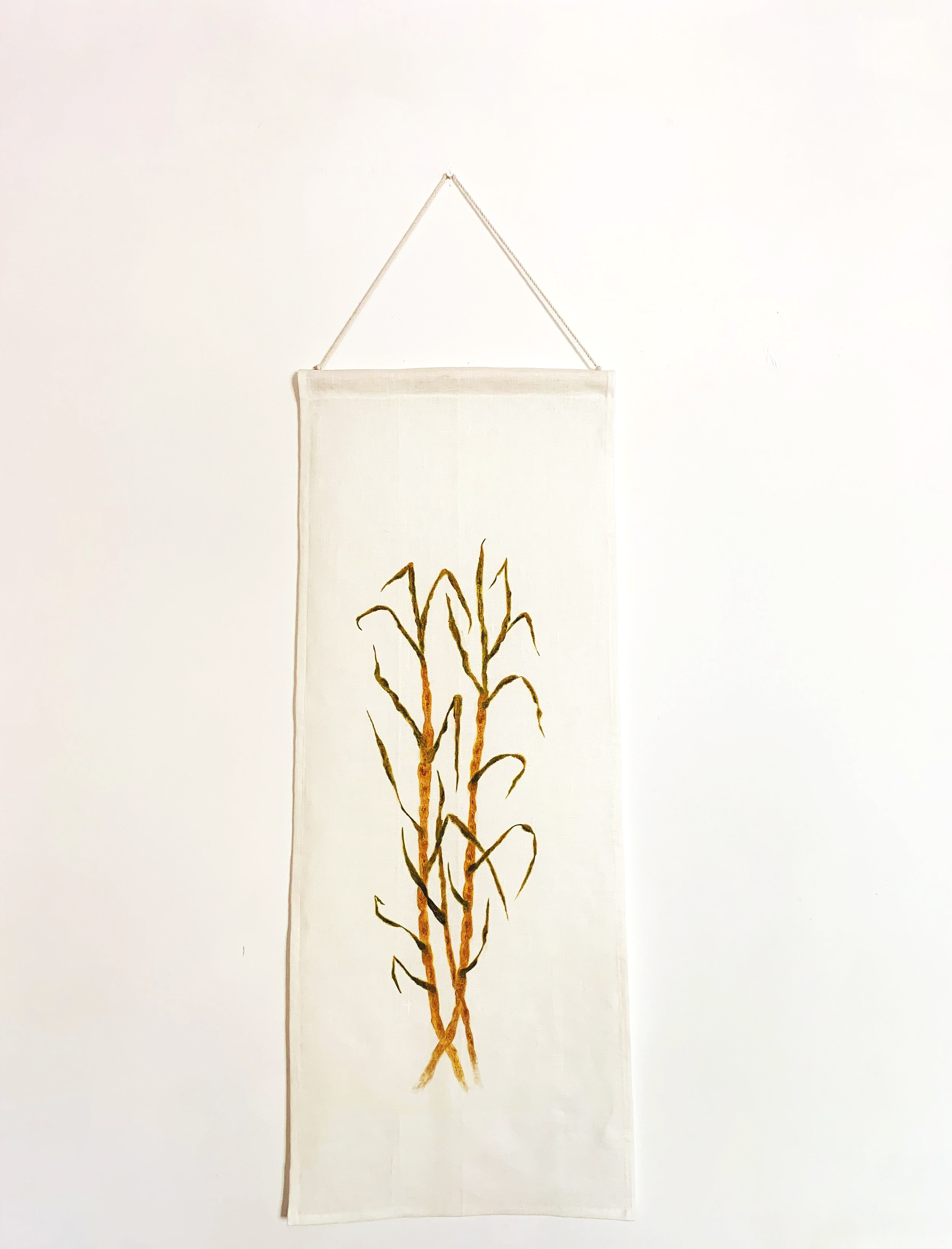
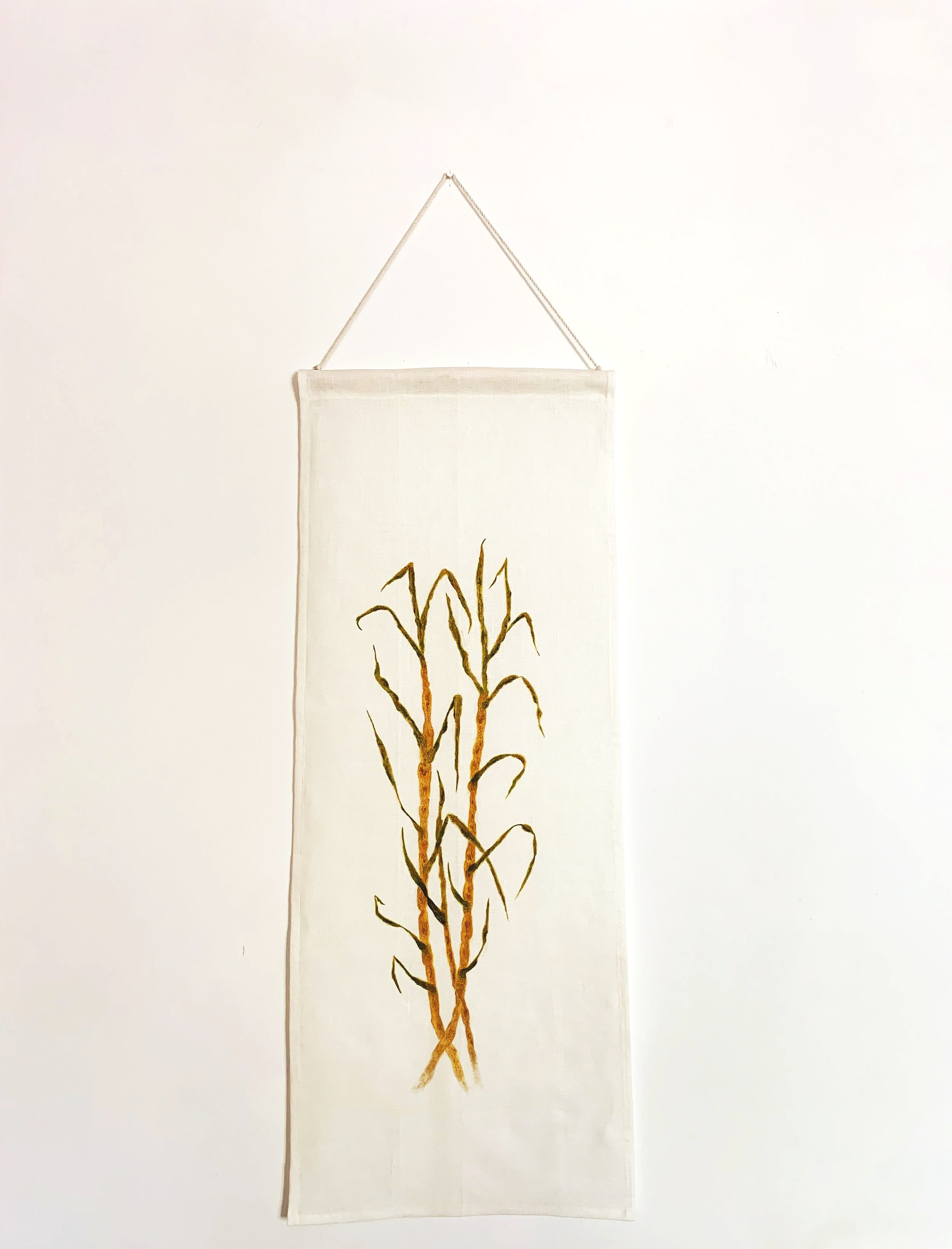
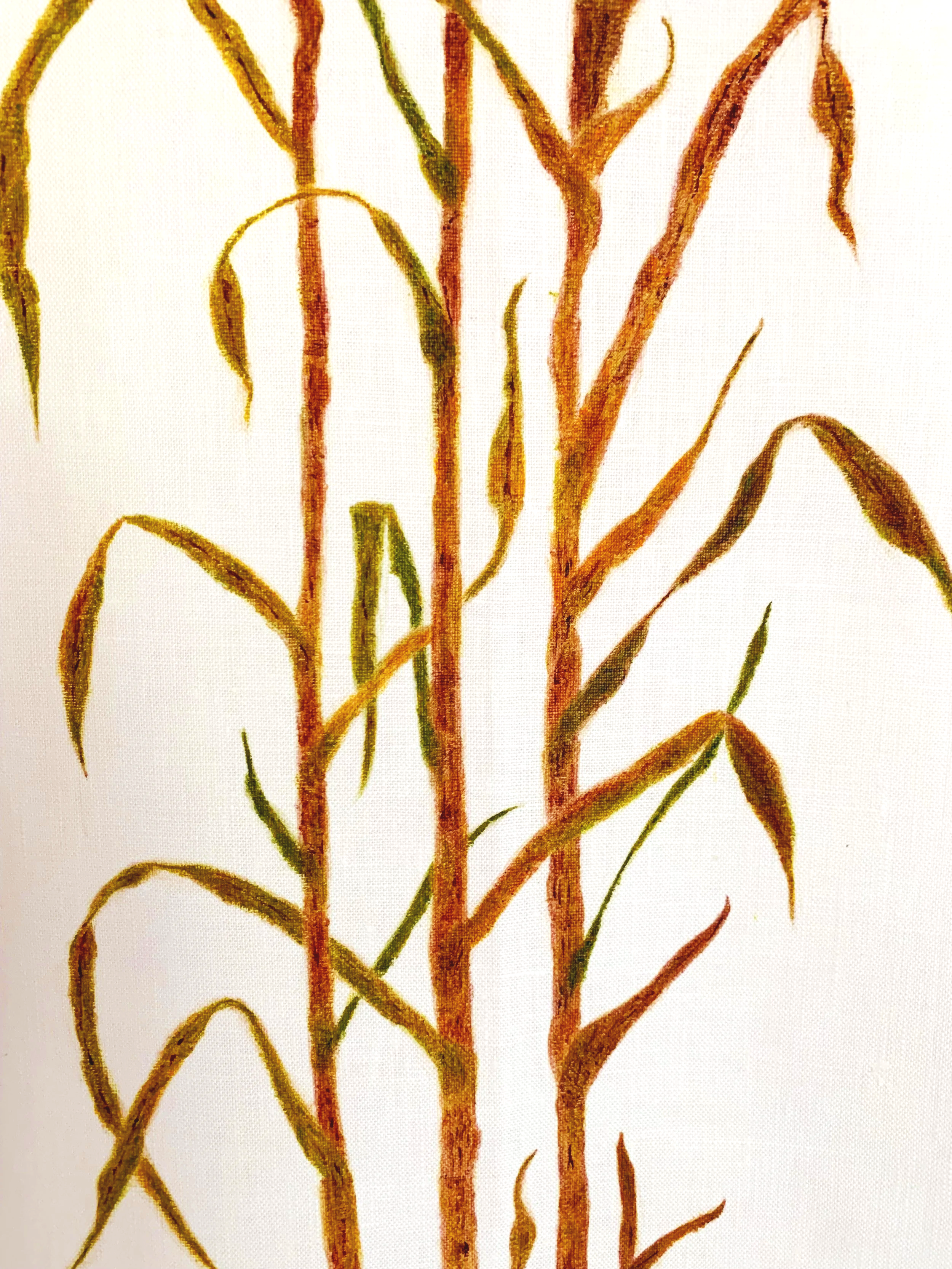
The sugarcane linen scrolls form the first body of work presented by Botanica Brasilis in 2026.
The series begins with sugarcane because the plant occupies a singular position within Brazilian cultural and environmental history. For centuries, sugarcane reshaped landscapes, economies, labour systems, and patterns of migration across the Atlantic world. Its presence remains deeply embedded within the Brazilian imagination. The plant exists simultaneously as crop, symbol, memory, and historical trace.
For Cleidi Hearn, sugarcane also belongs to personal memory. She works from remembered cultivated plants rooted in her upbringing in rural Brazil. Descending from generations of subsistence farmers, the artist approaches agricultural plants as carriers of labour, survival, resistance, and inherited ecological knowledge.
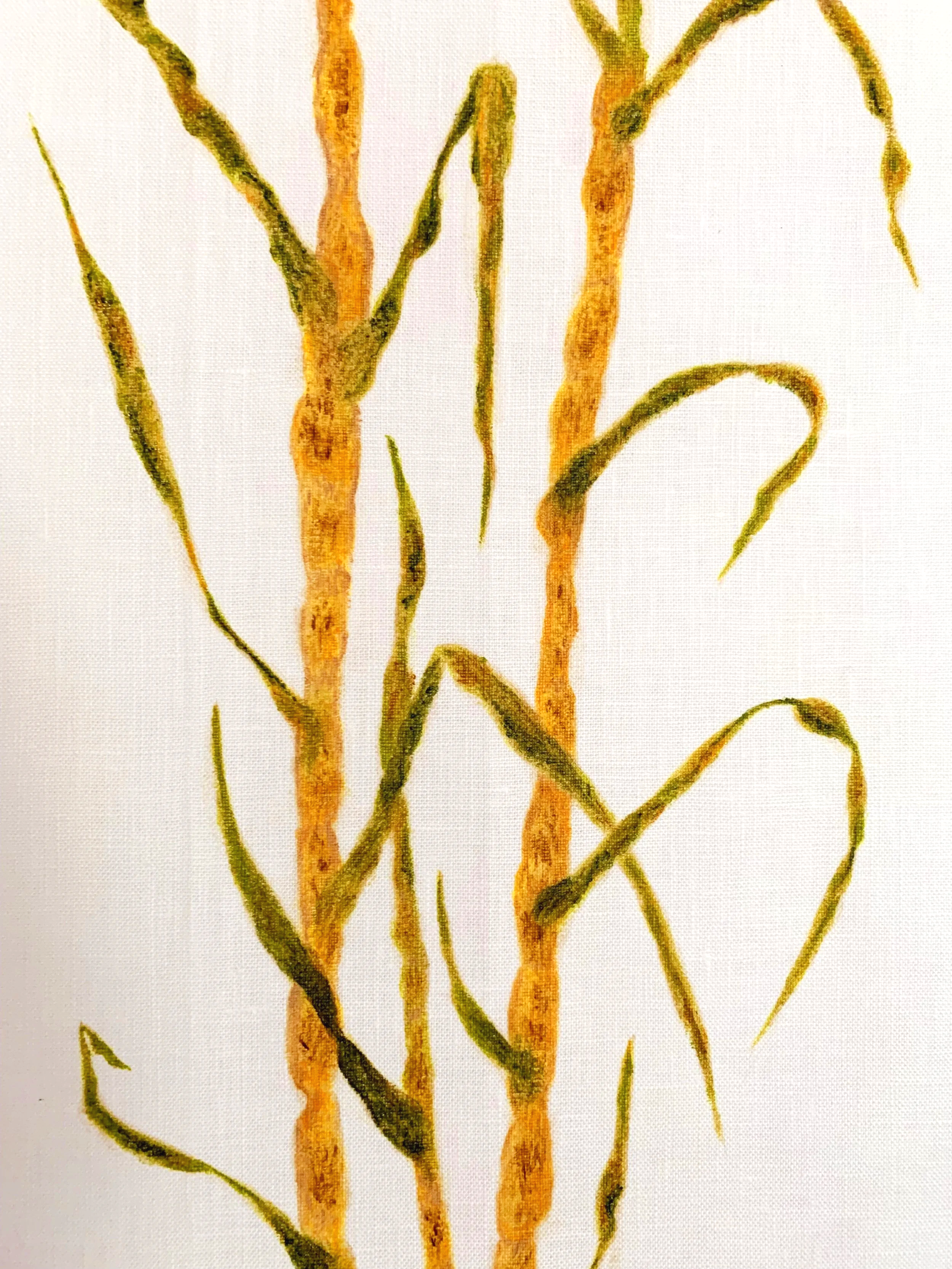
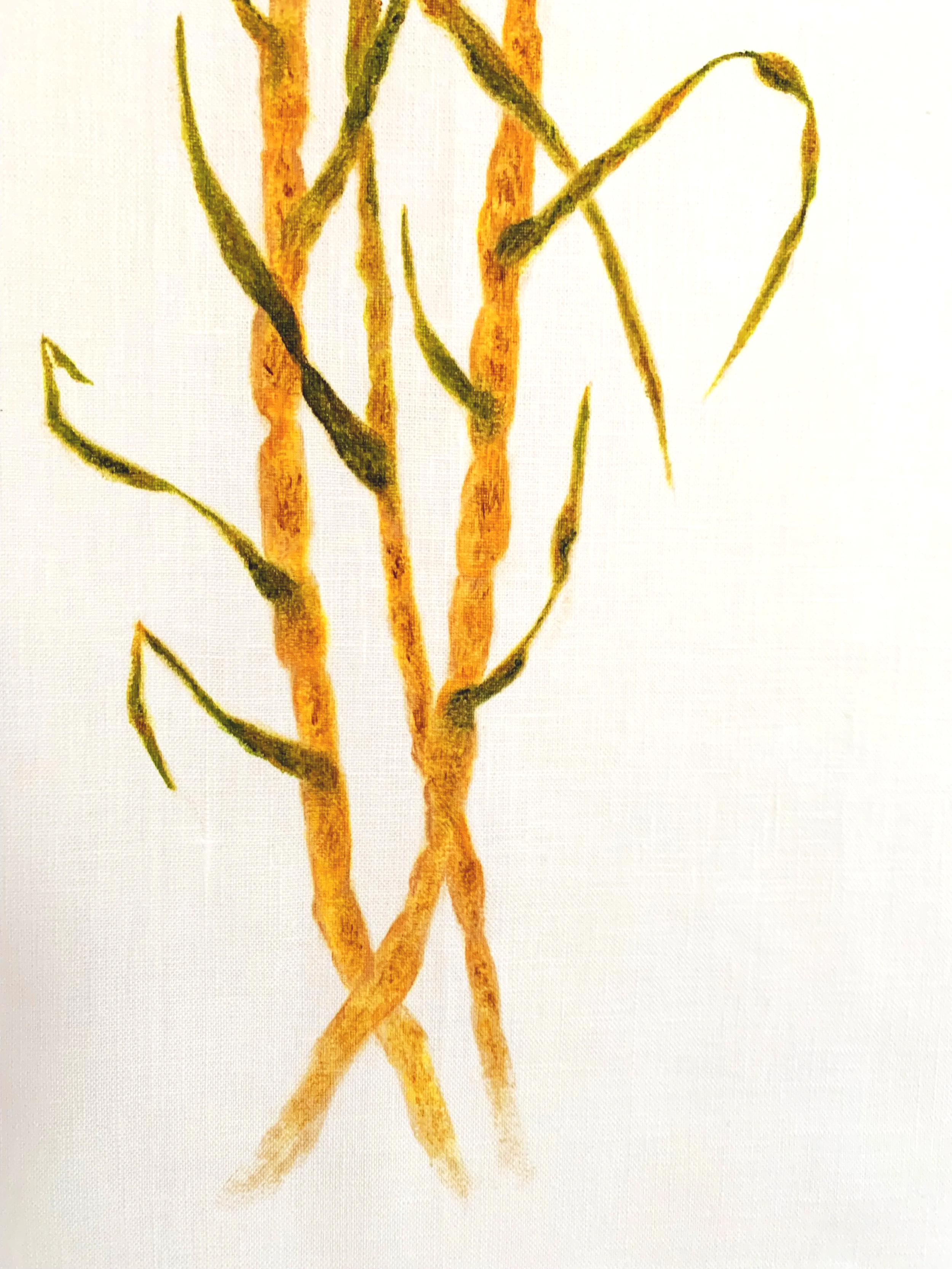
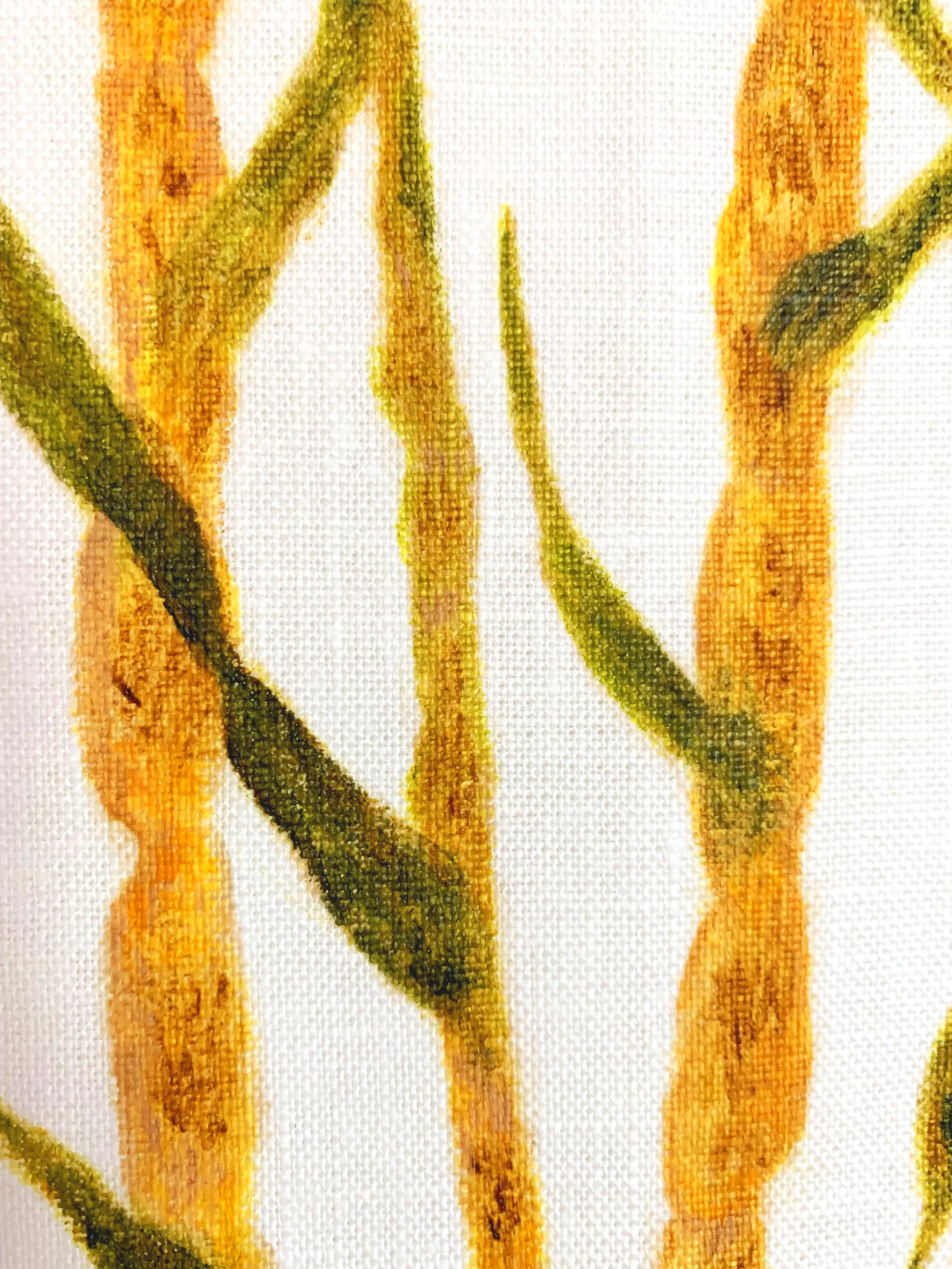
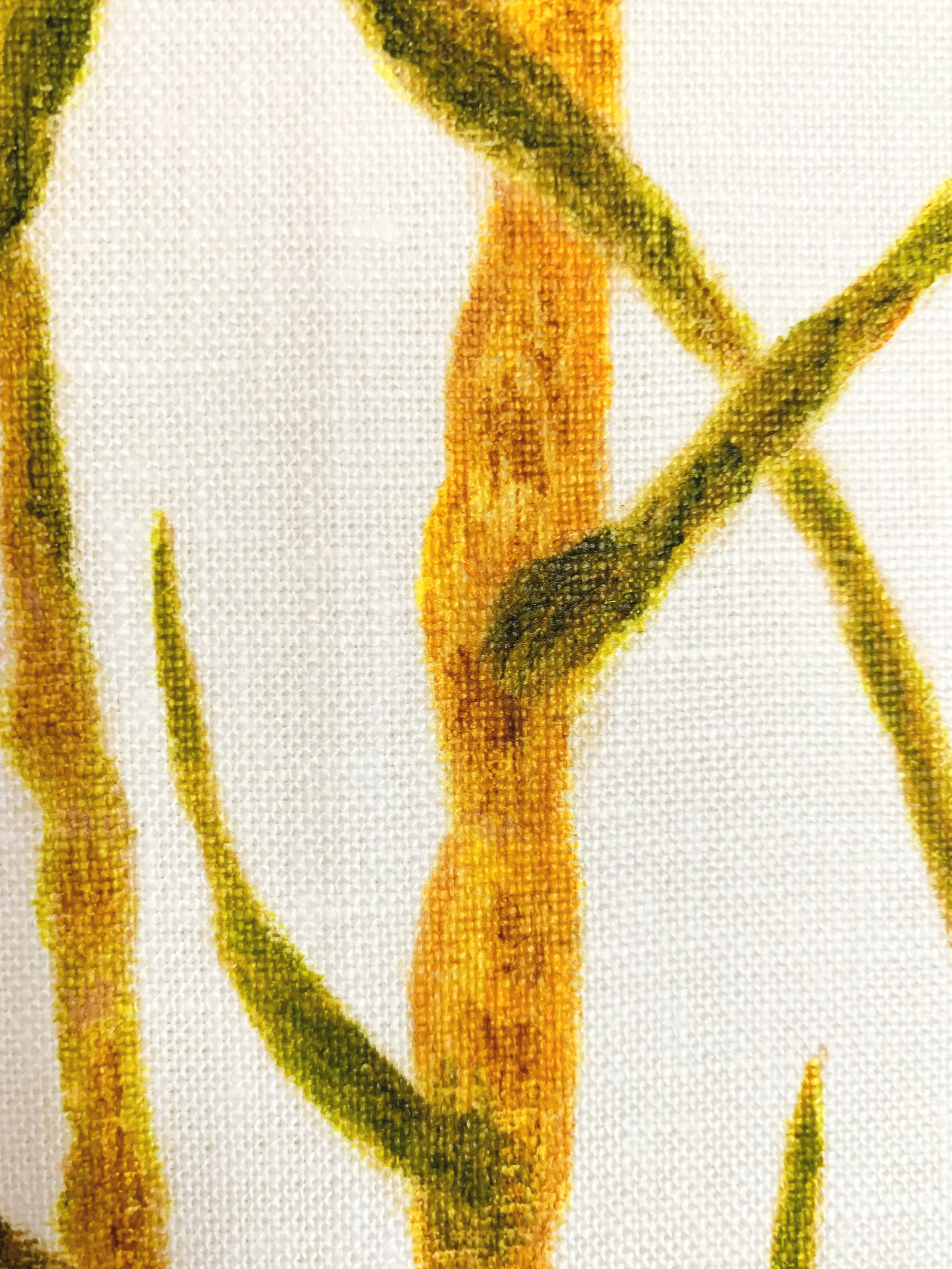
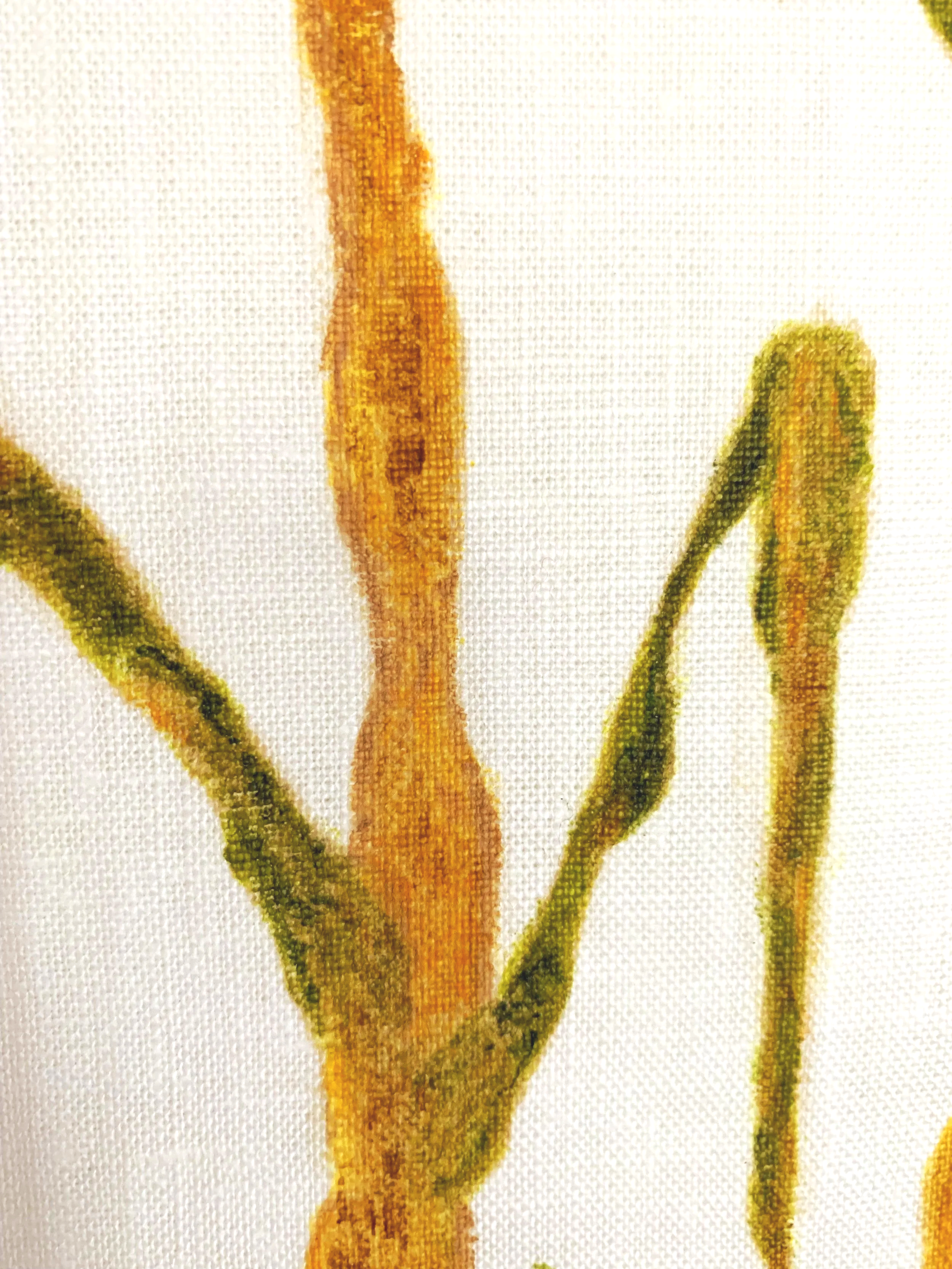
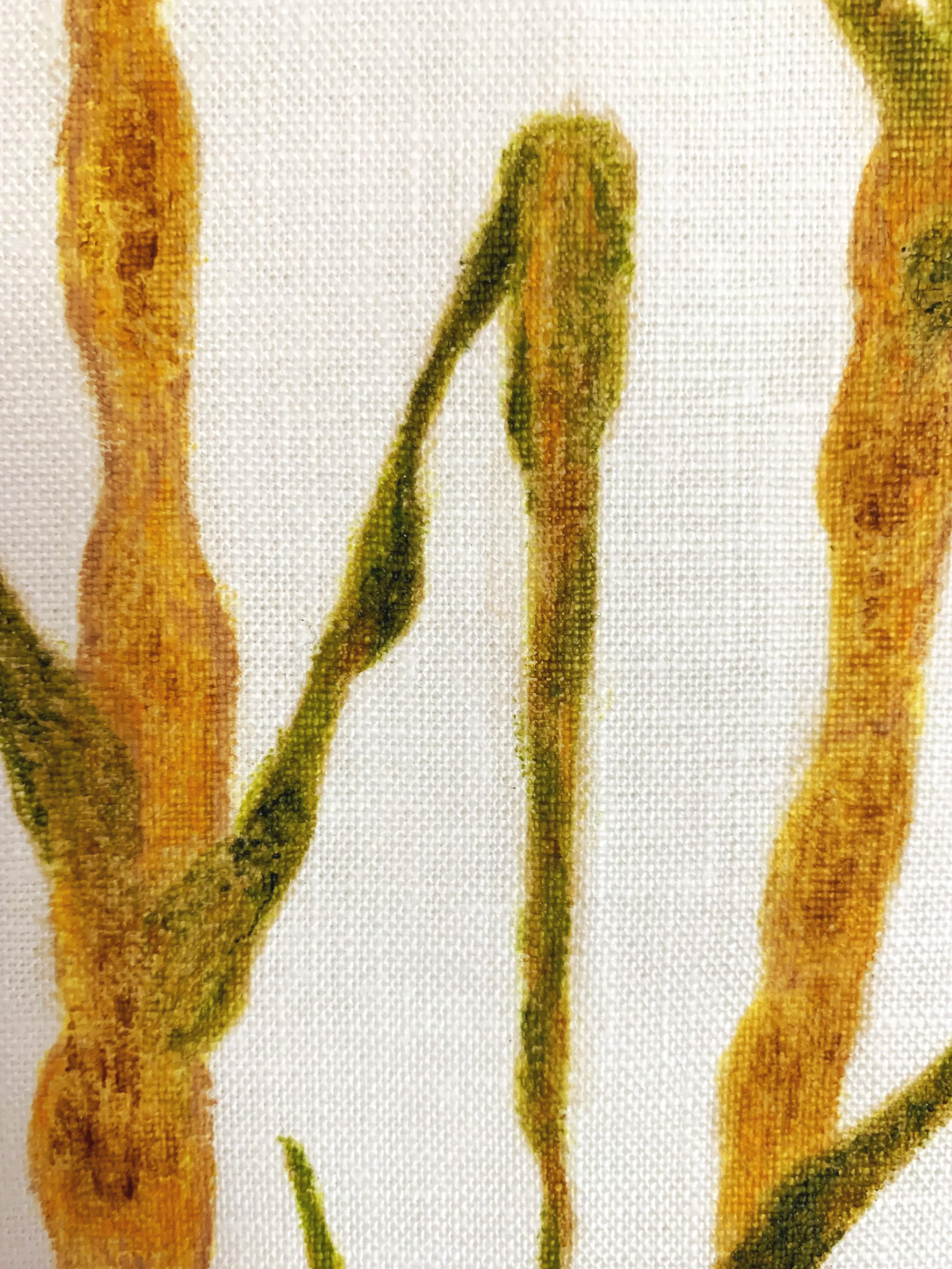
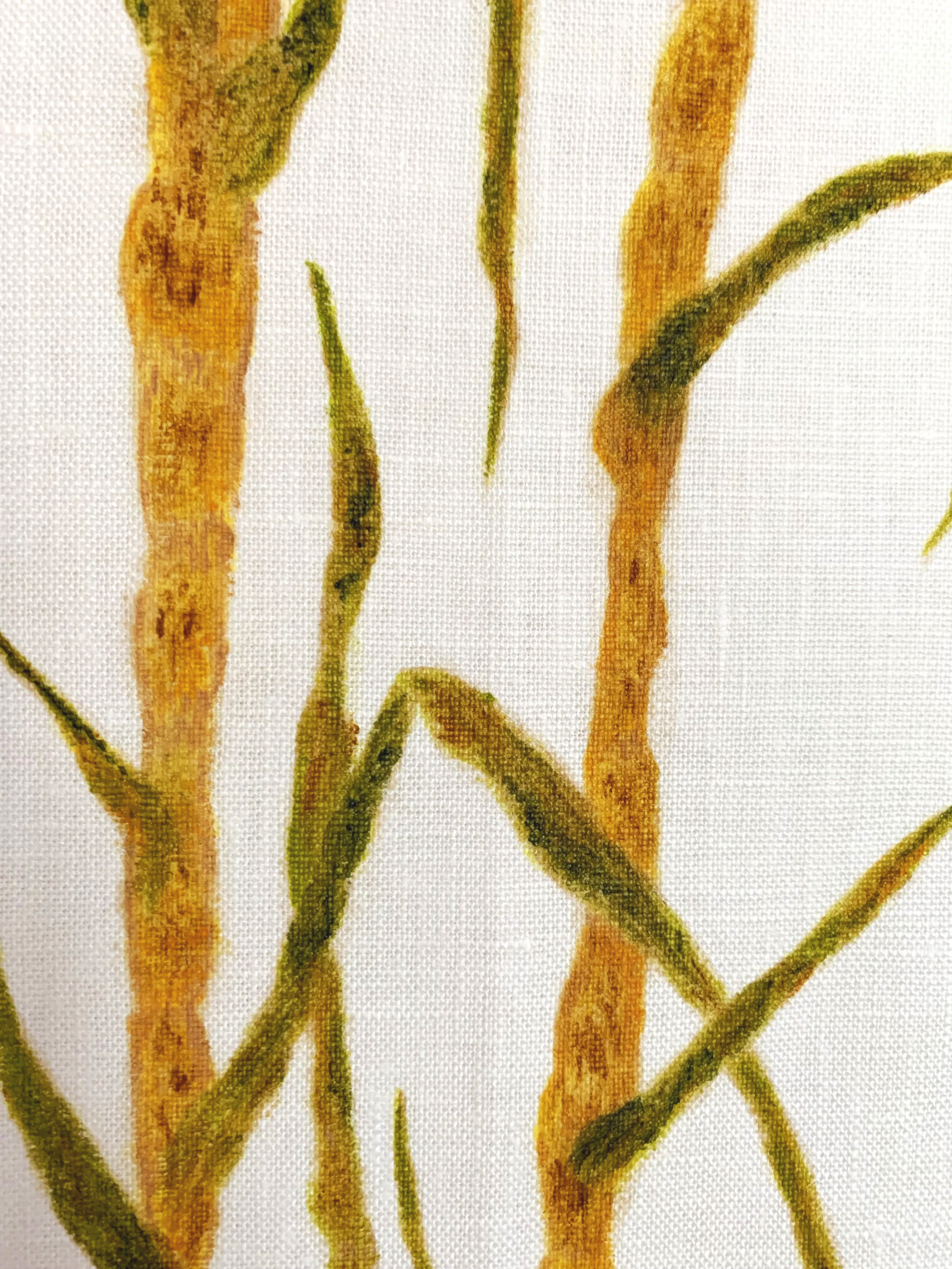
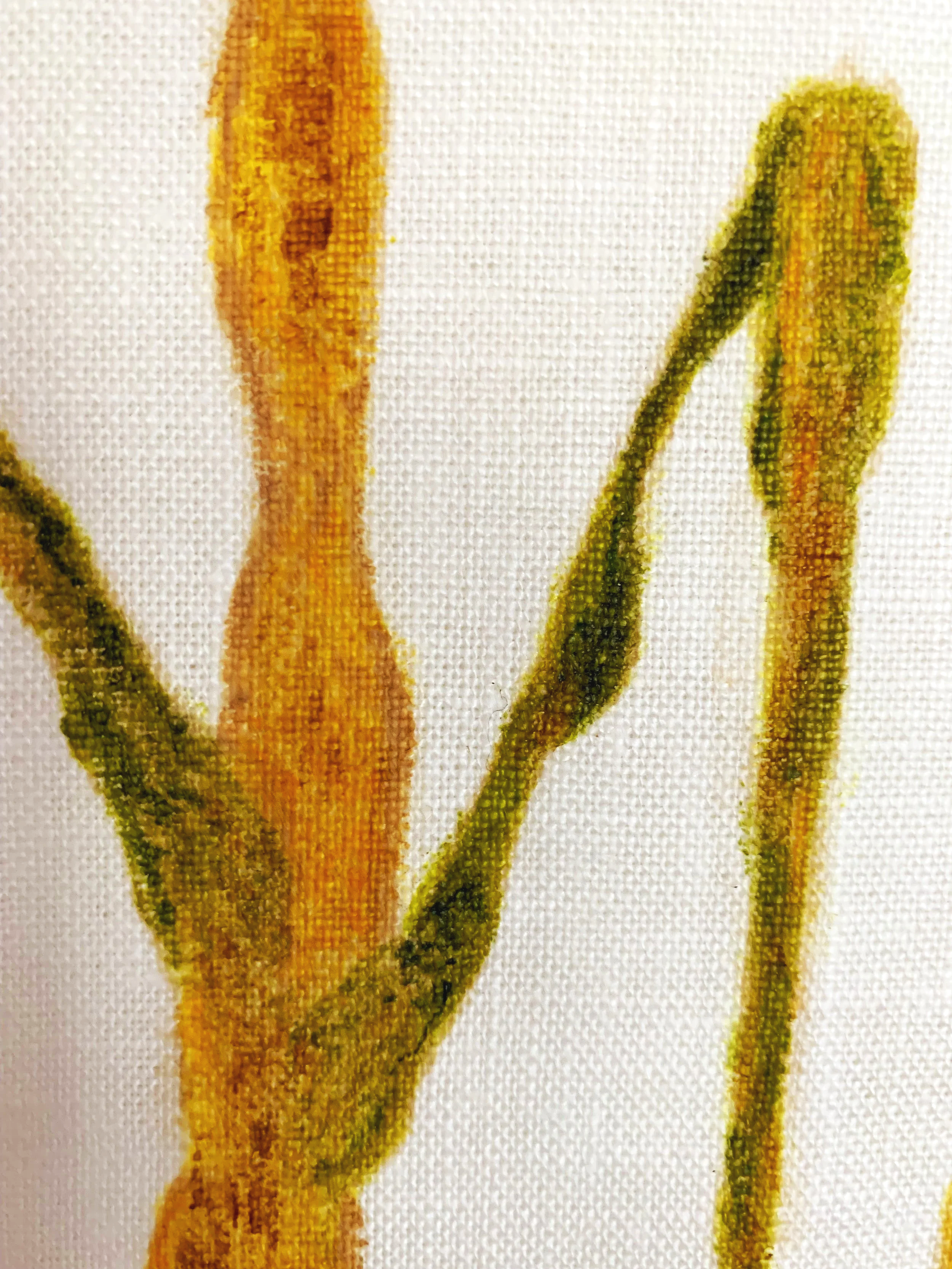
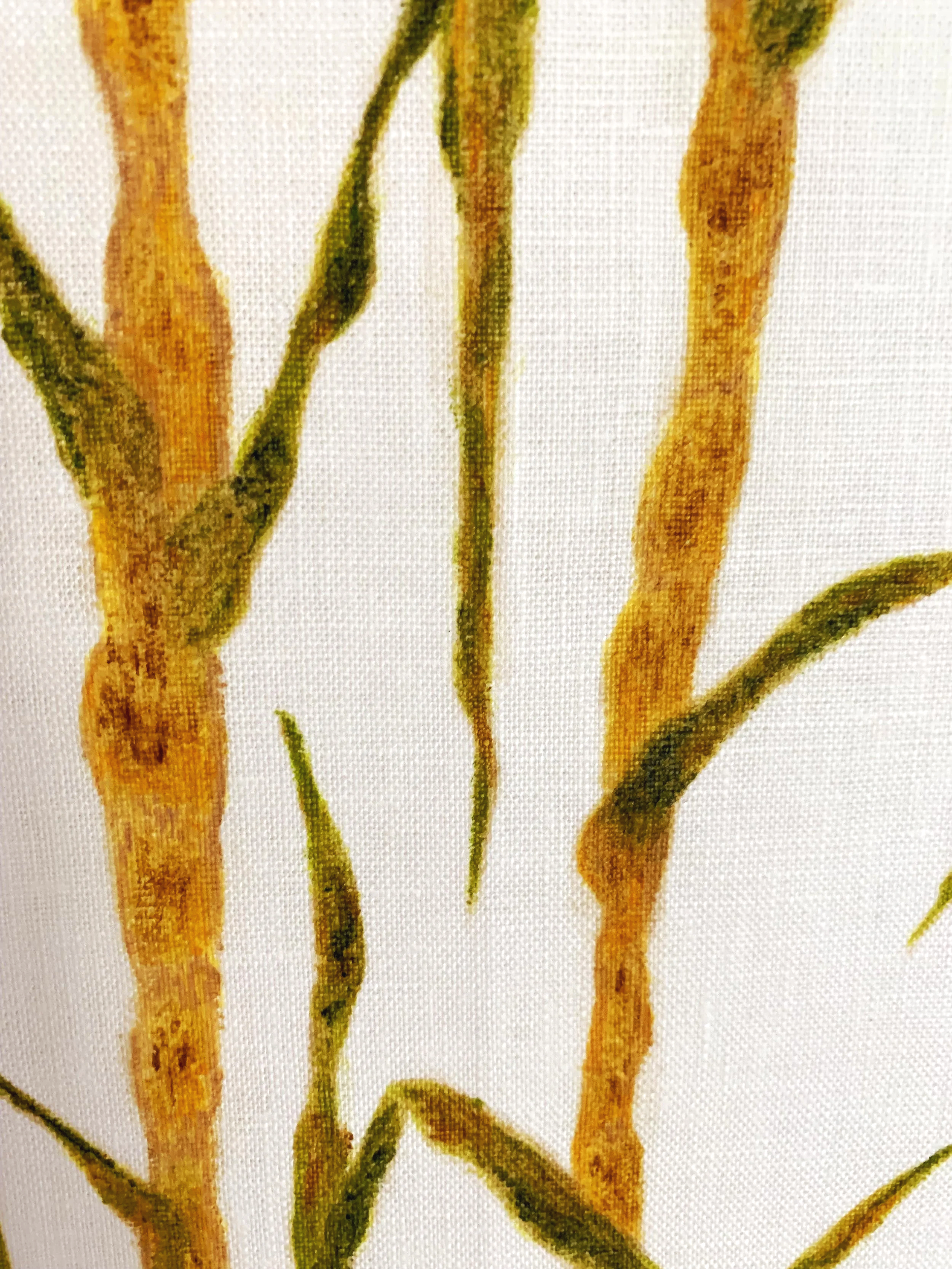
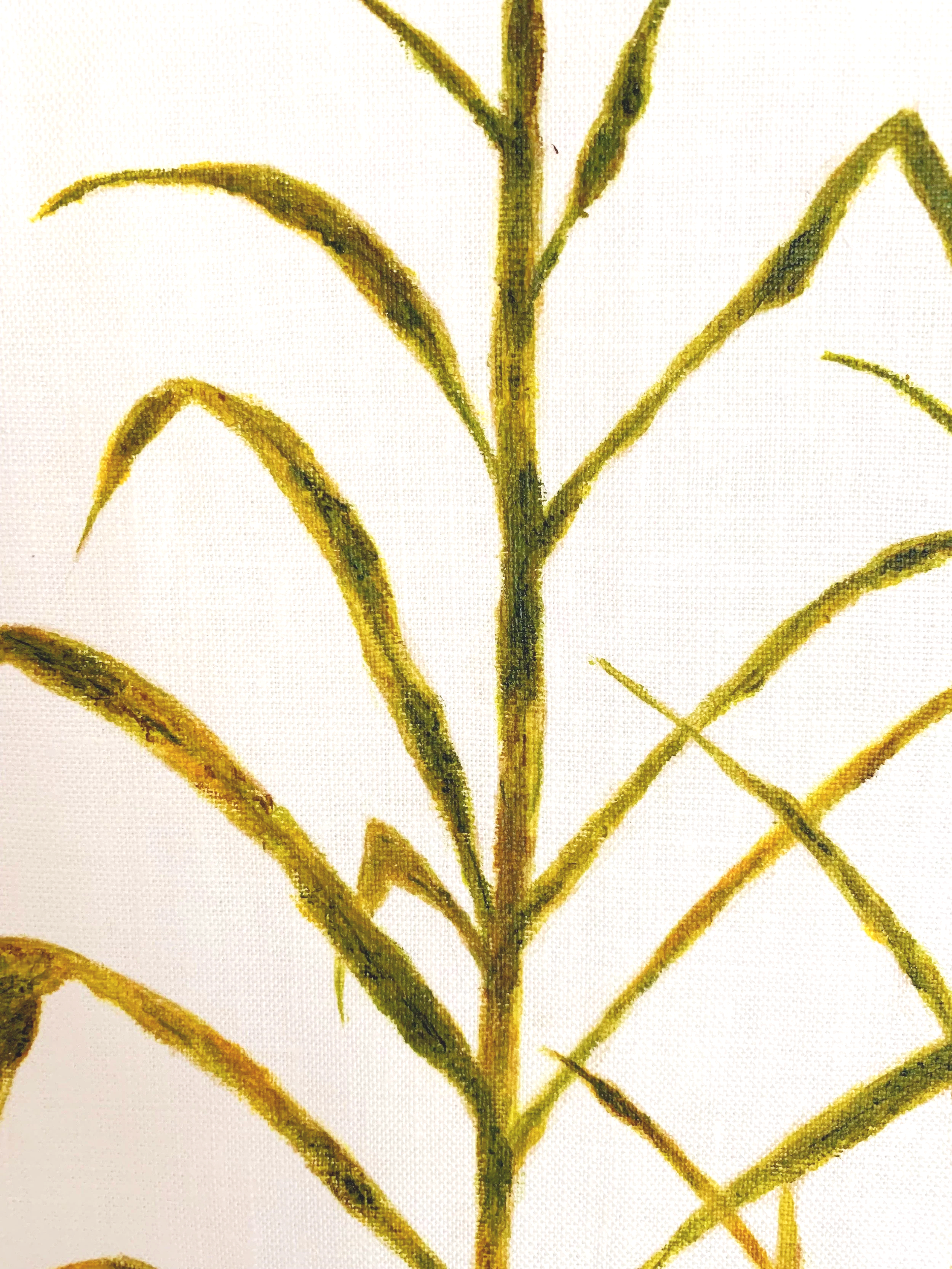
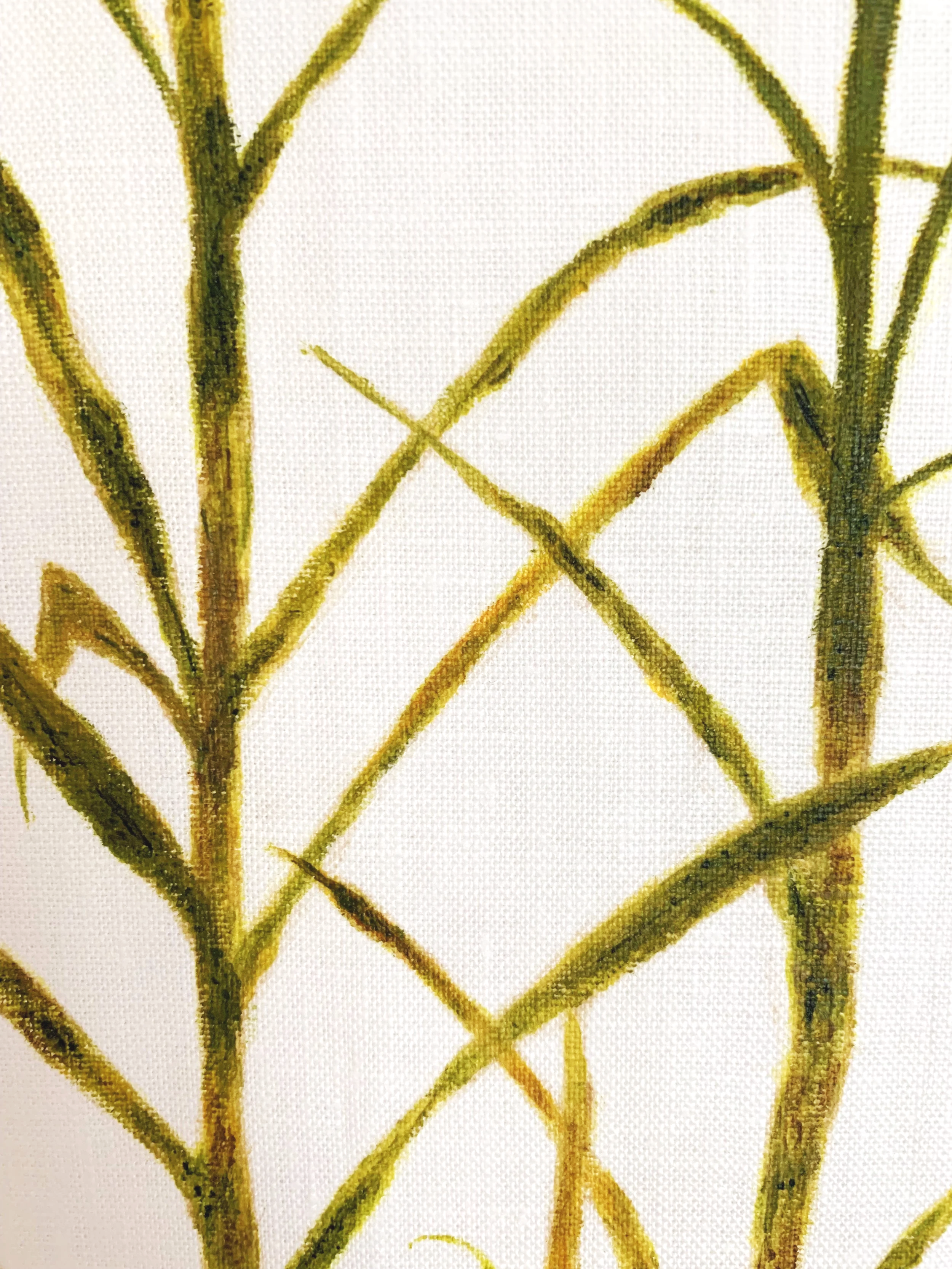
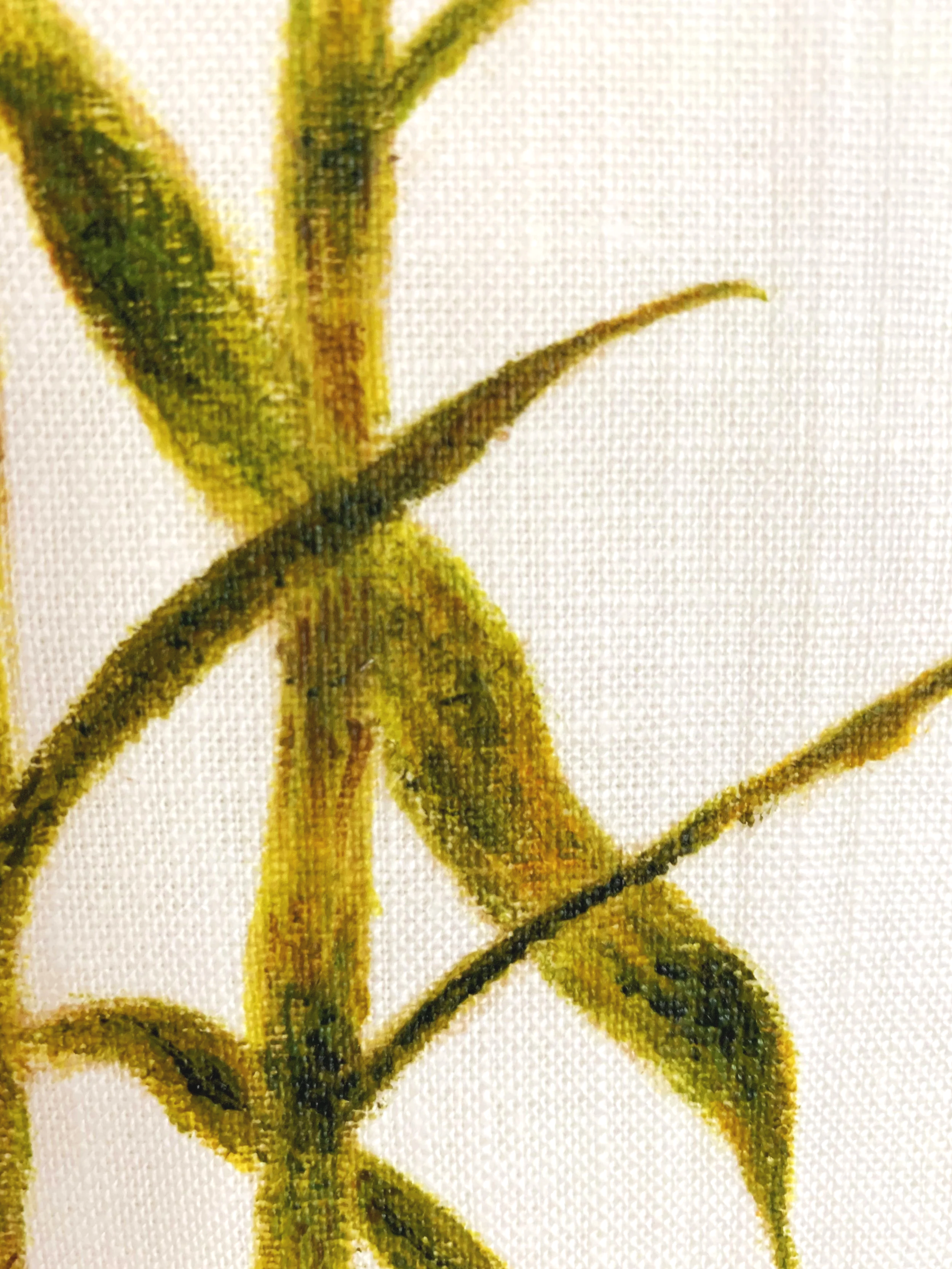
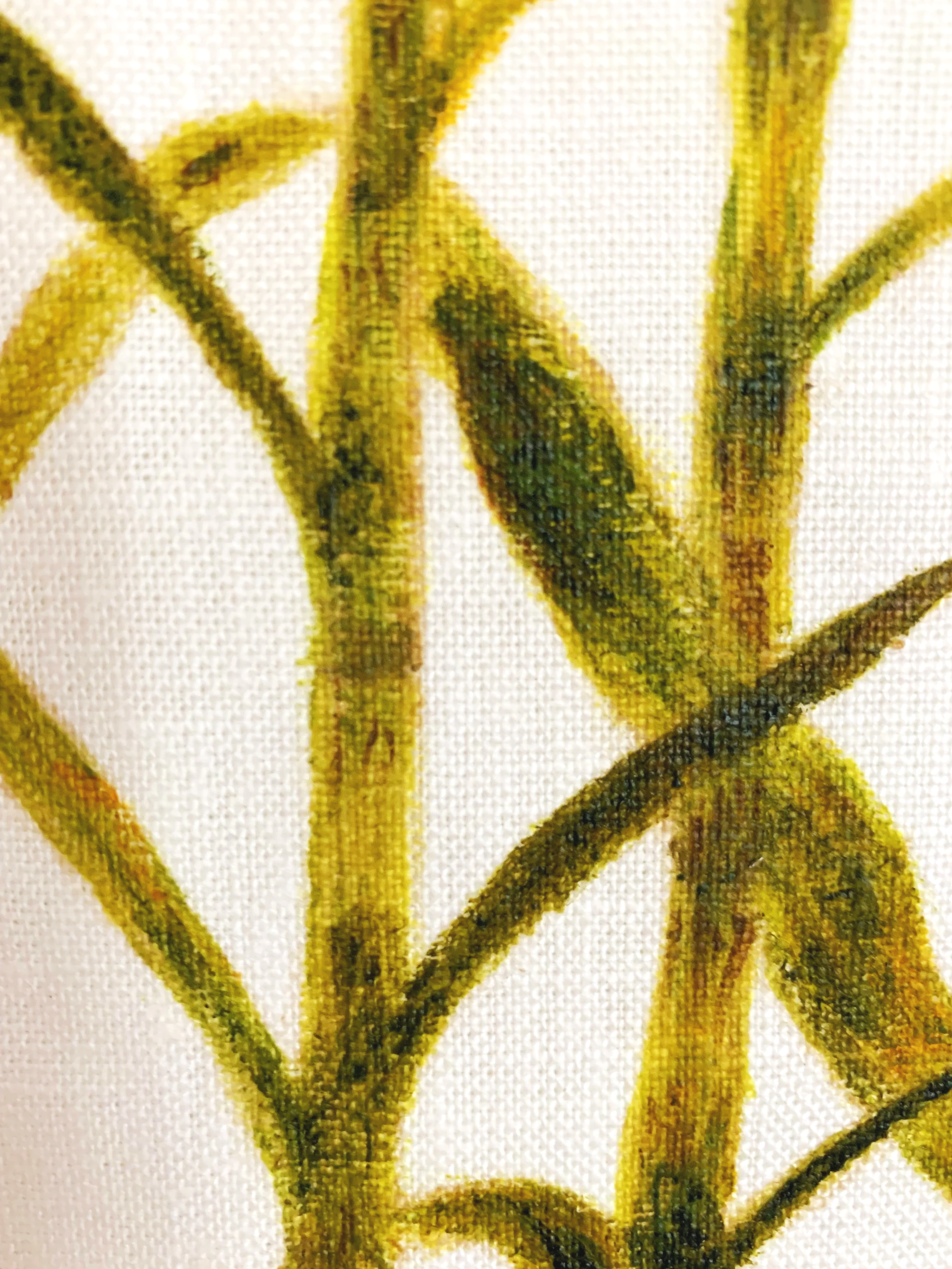
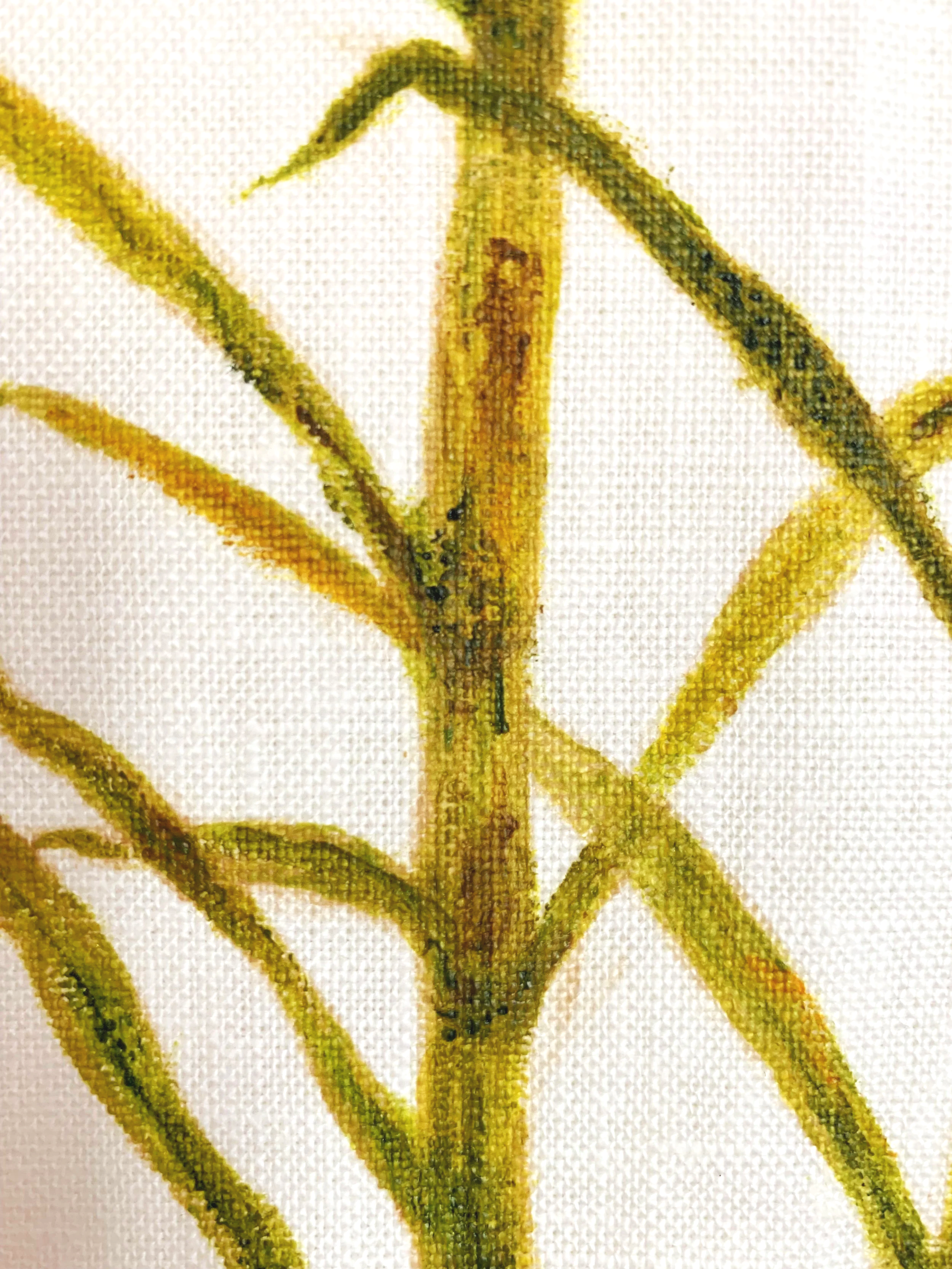
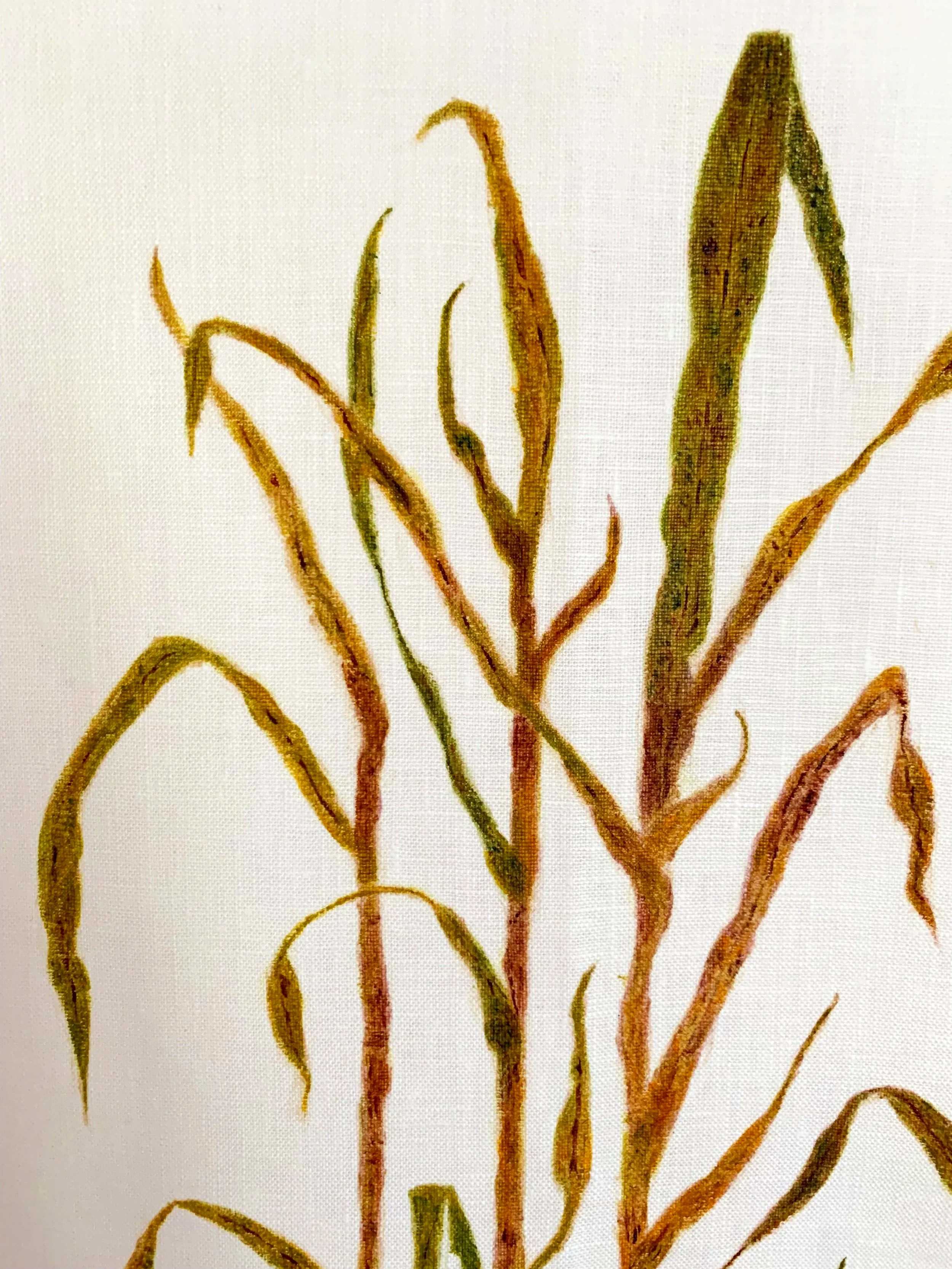
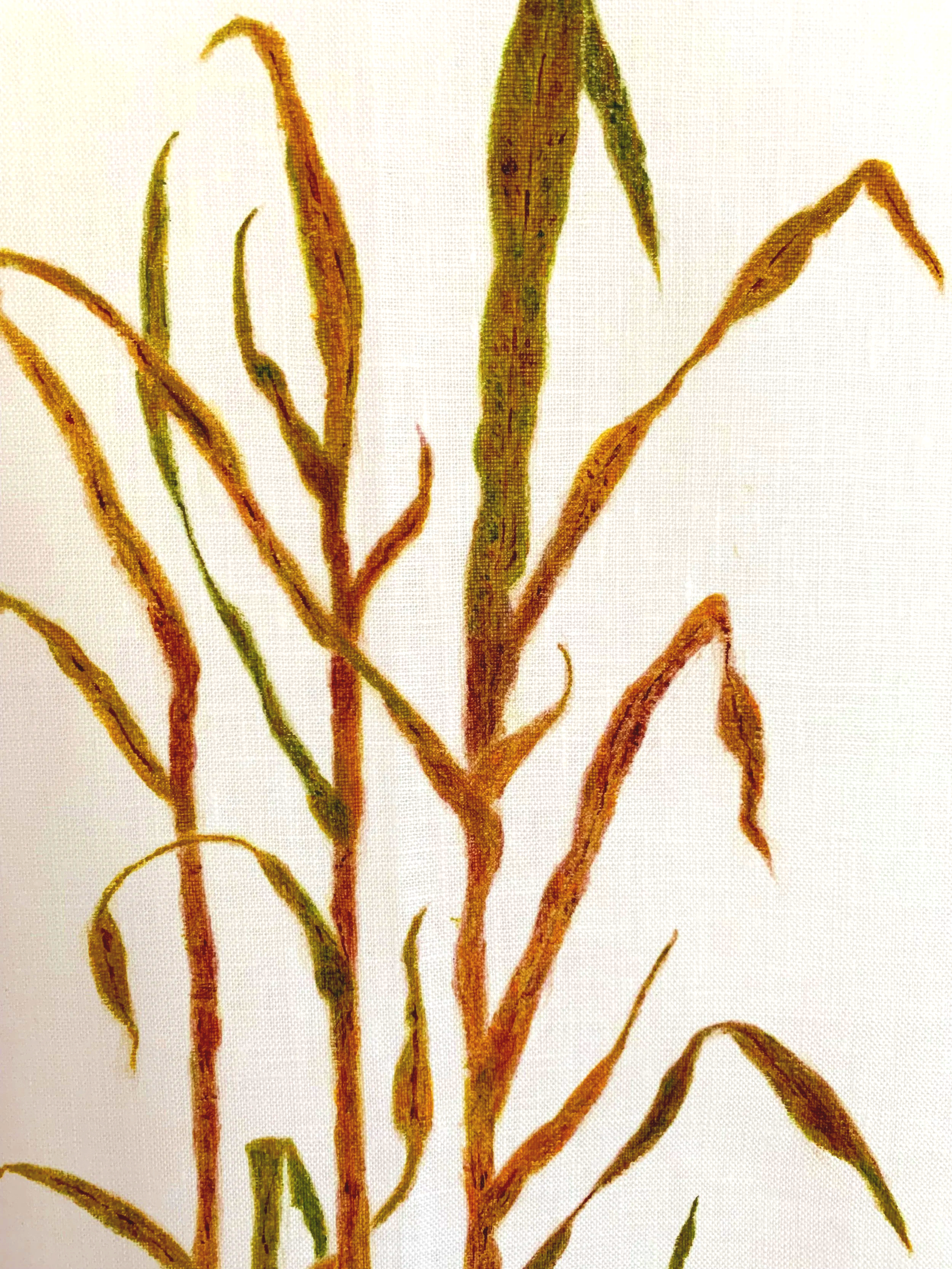
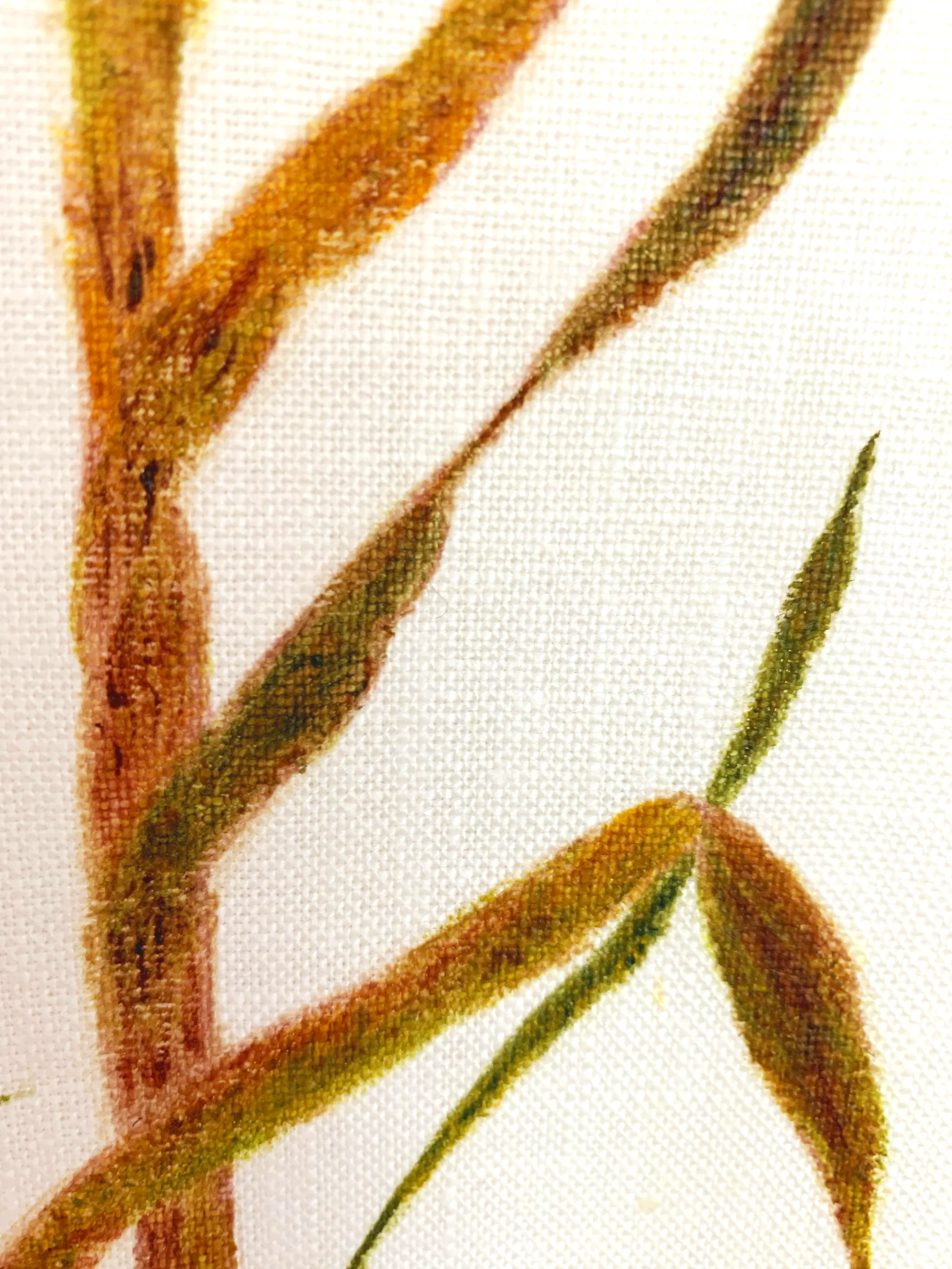
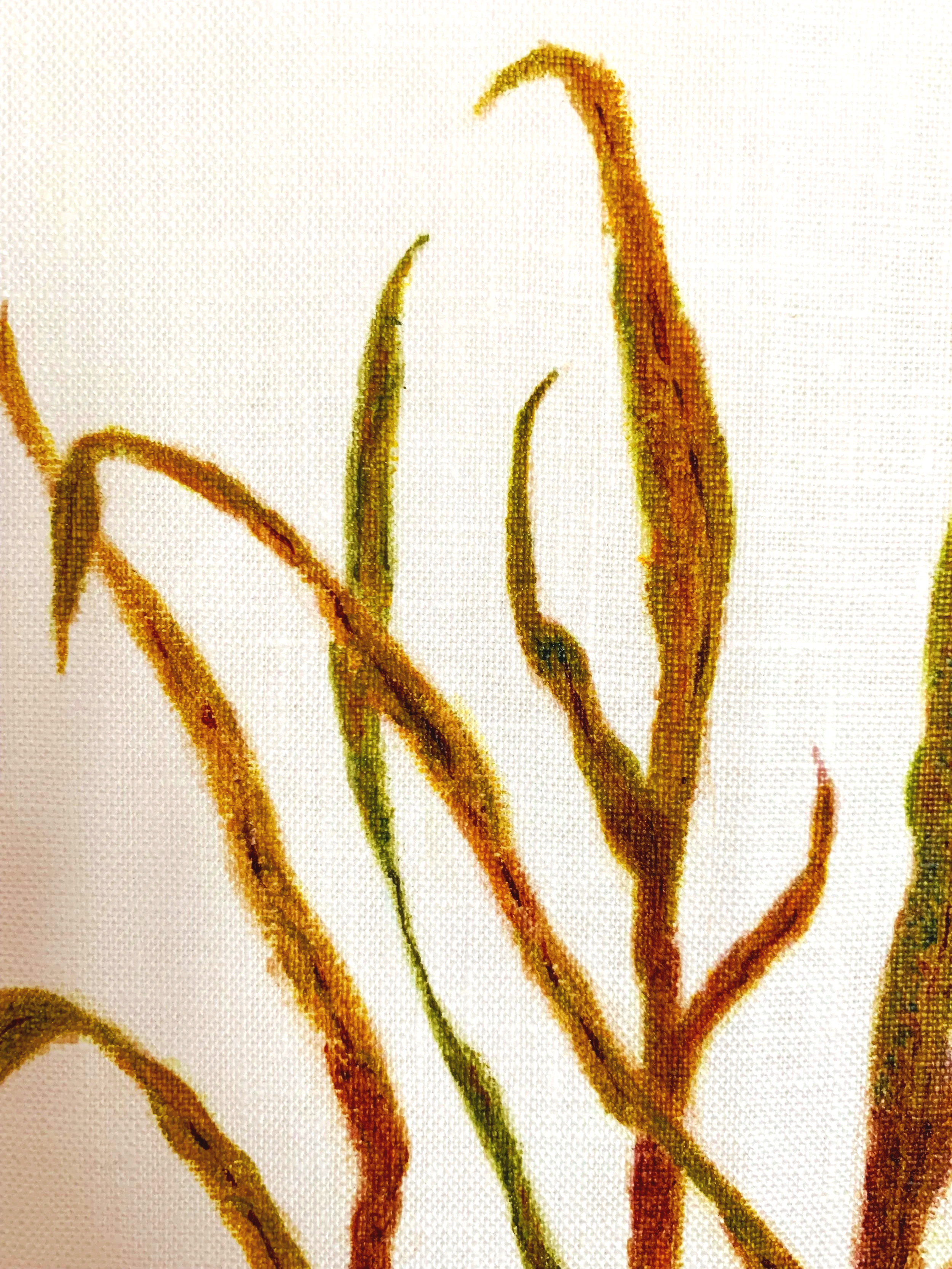
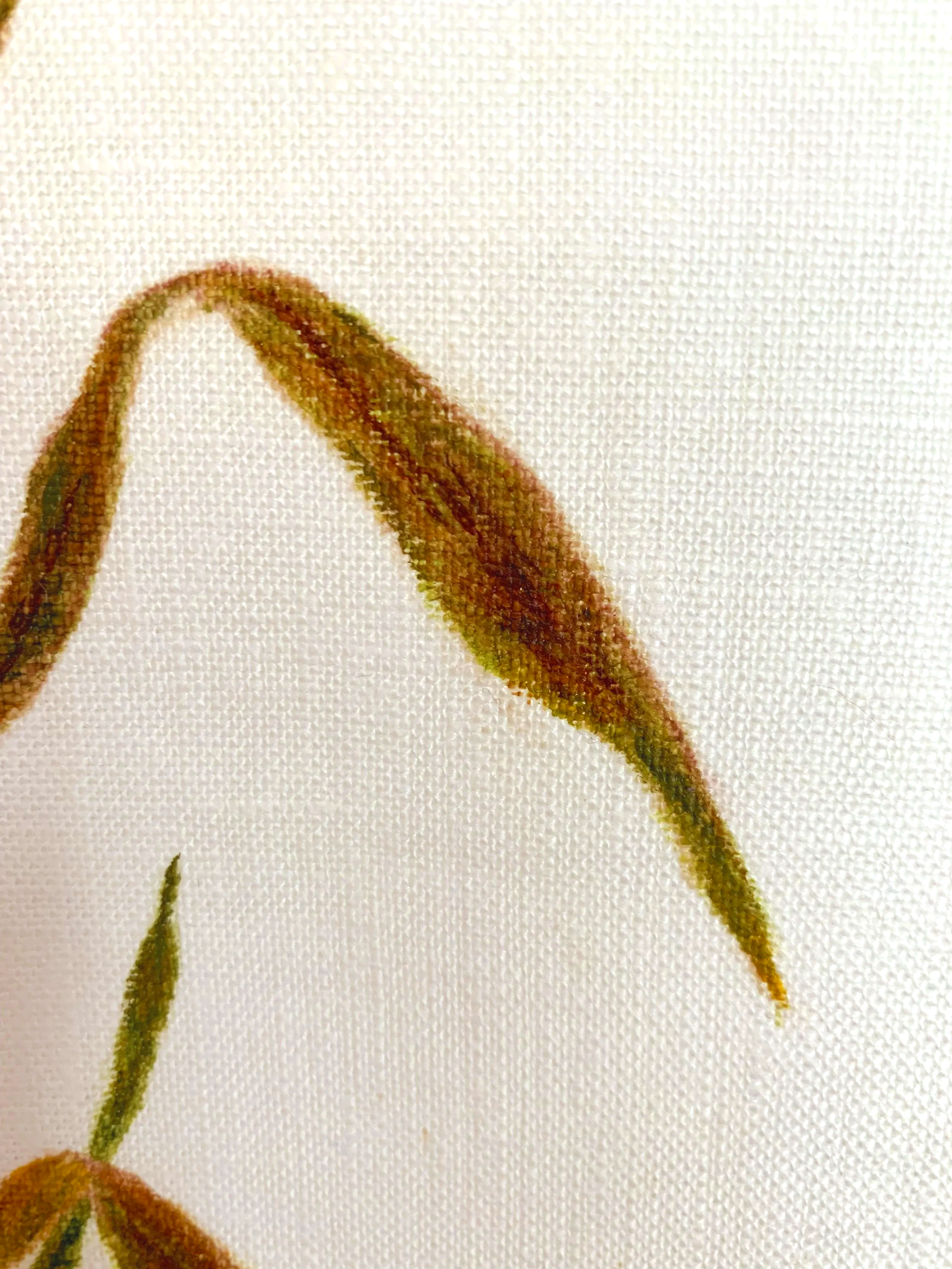
The forms emerge gradually through recollection. Leaves, stems, and tonal variations appear partially preserved, fragmented, or unstable, carrying the shifting nature of memory itself. The paintings do not seek botanical description. They reconstruct the sensation of remembering a cultivated plant across geographic distance.
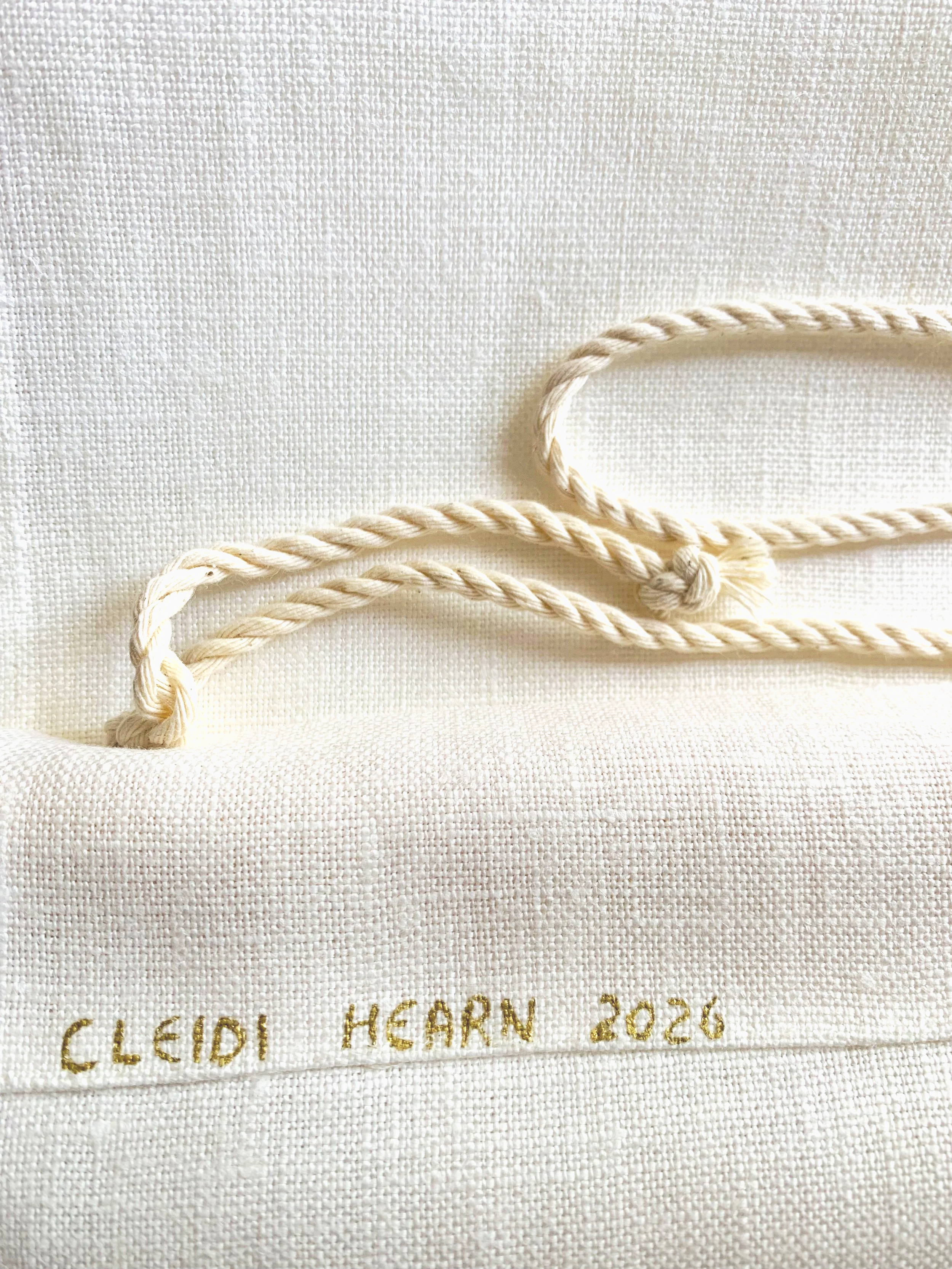
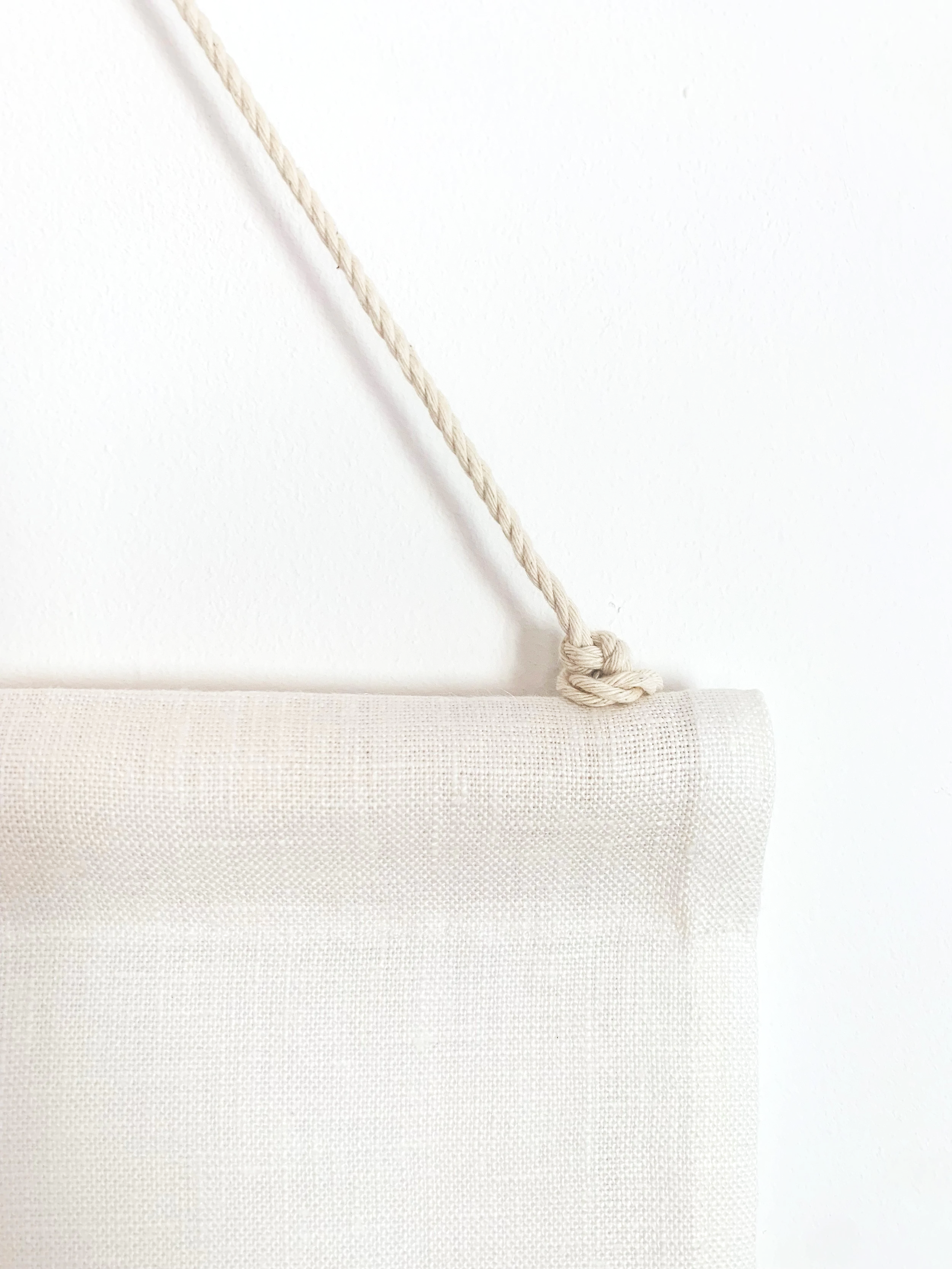
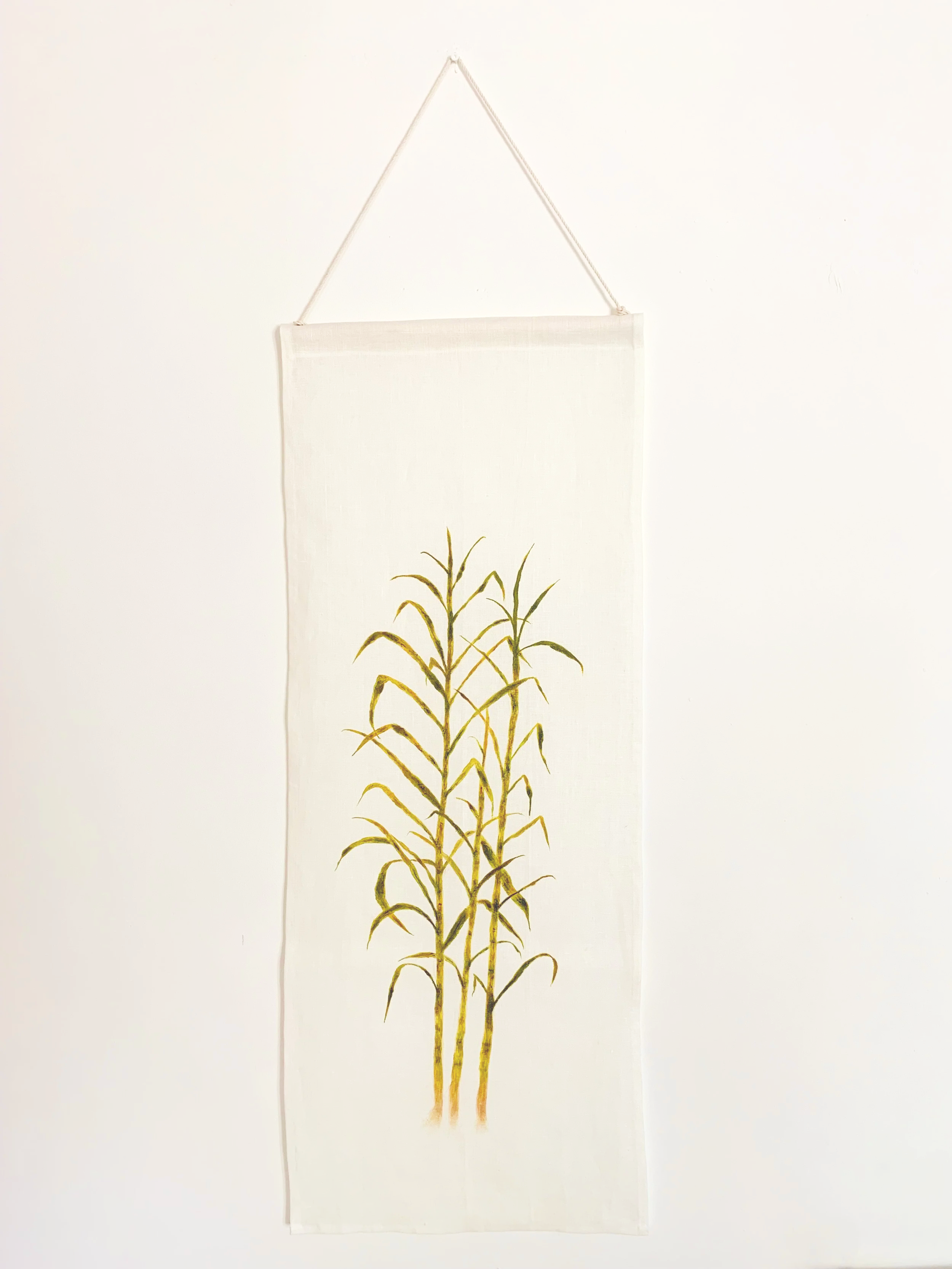
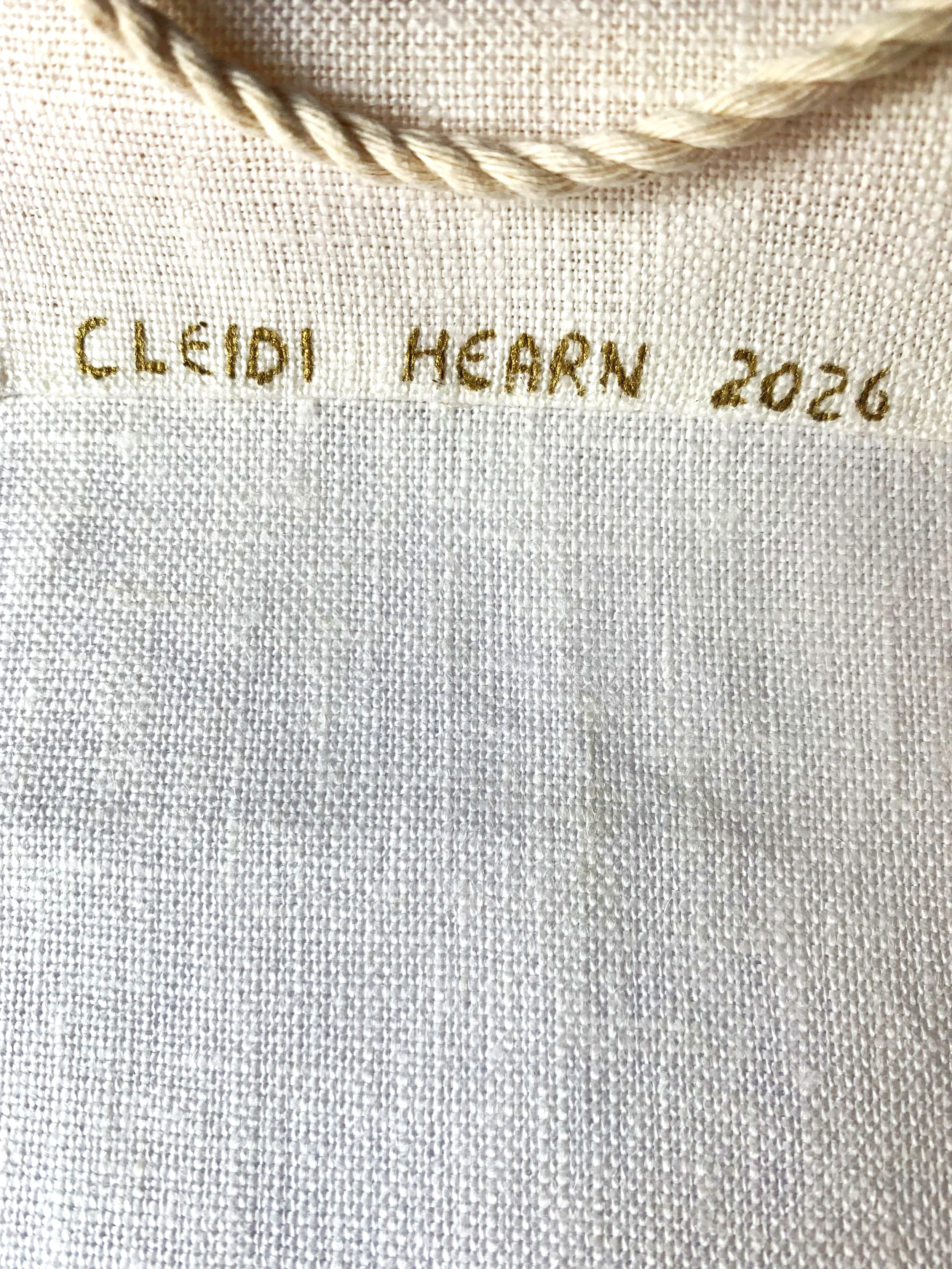
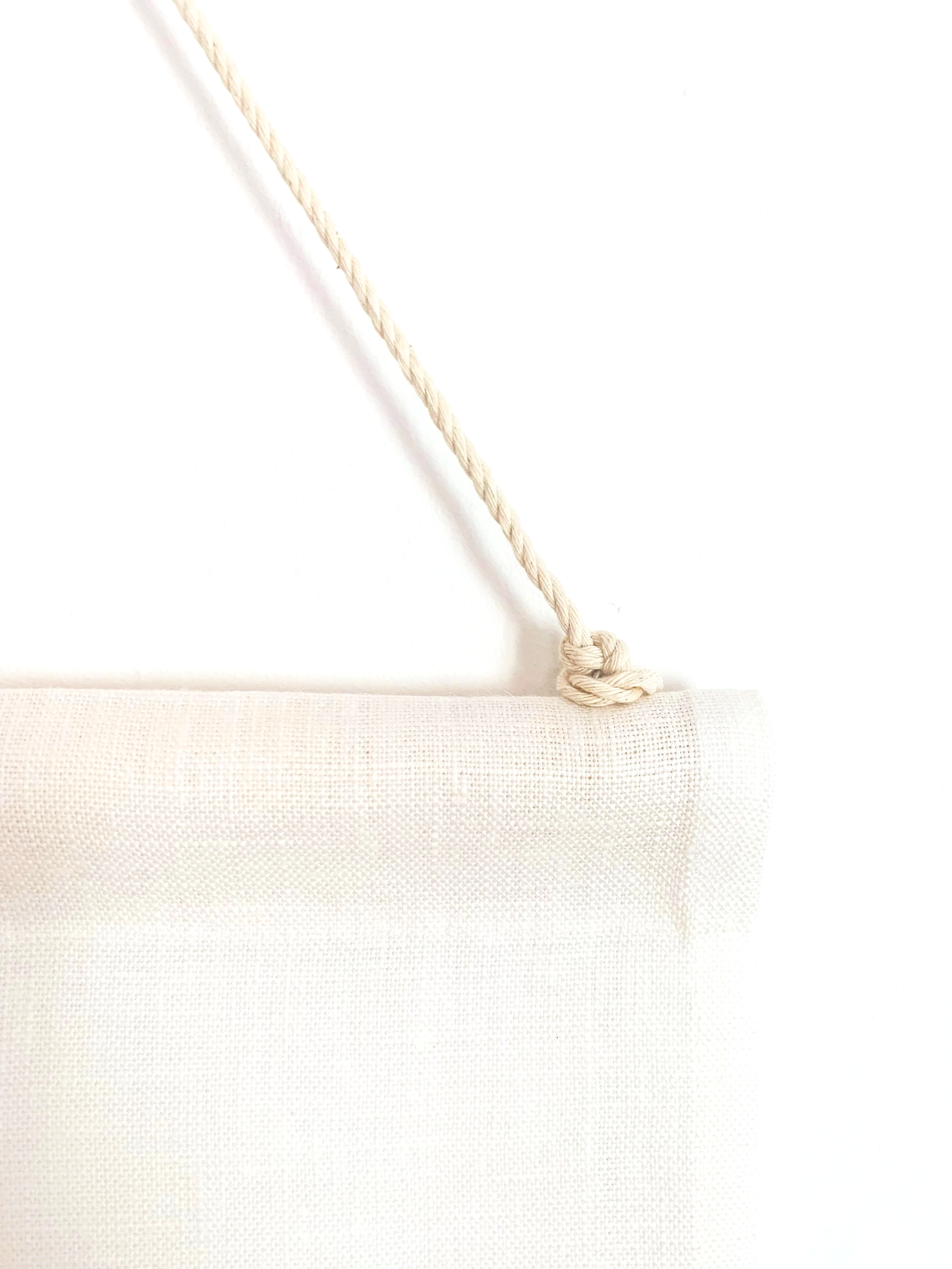
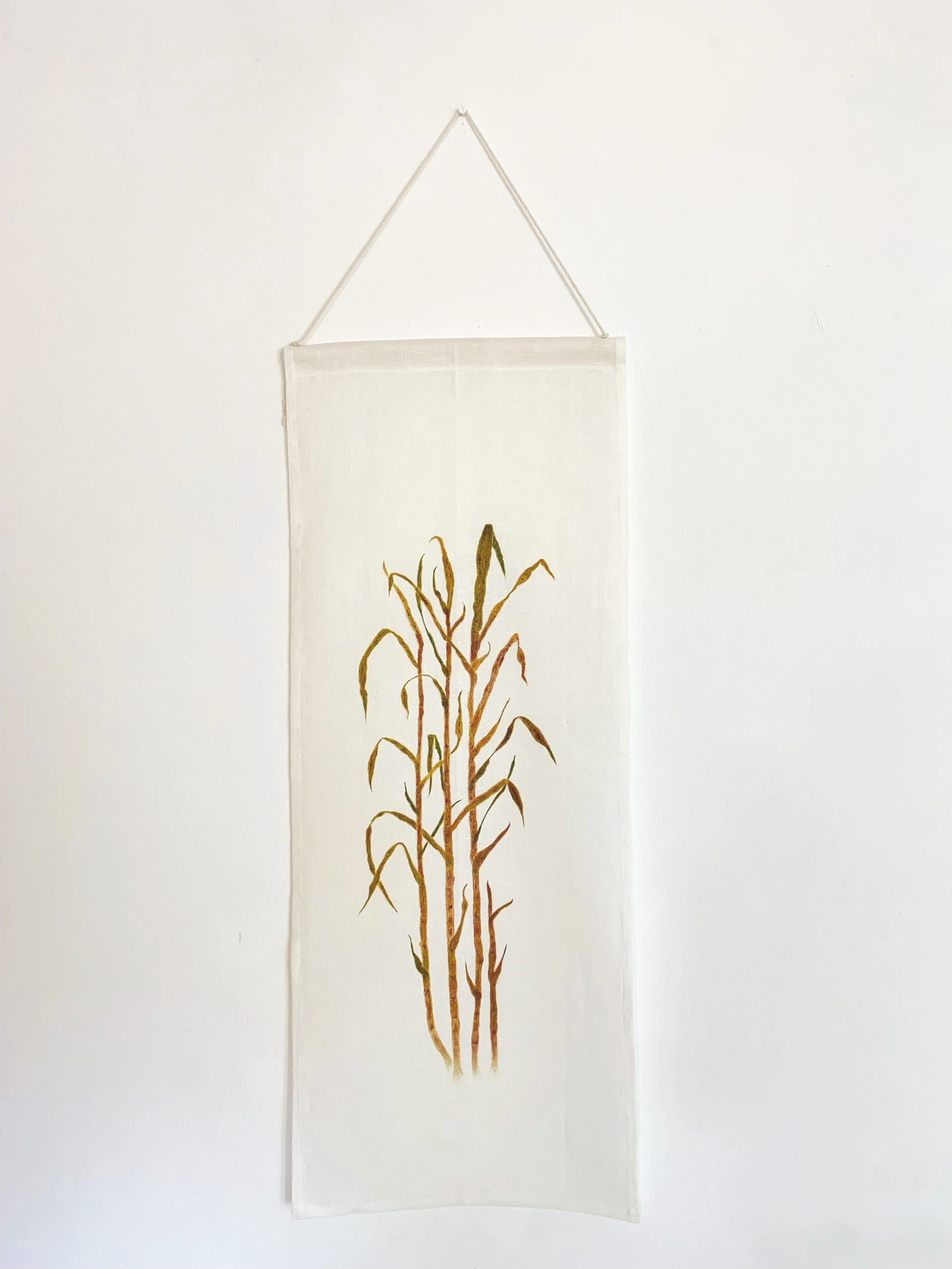
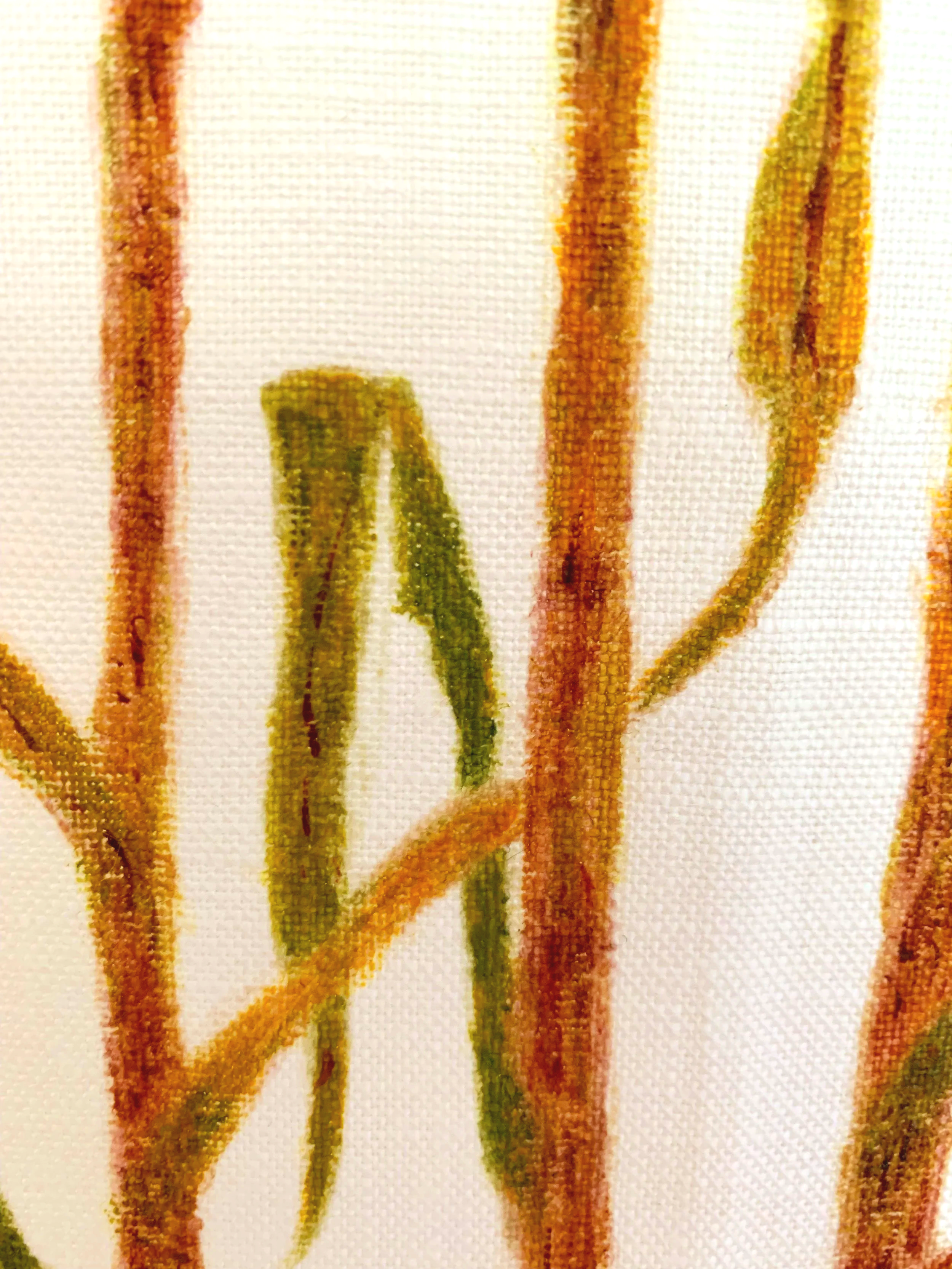
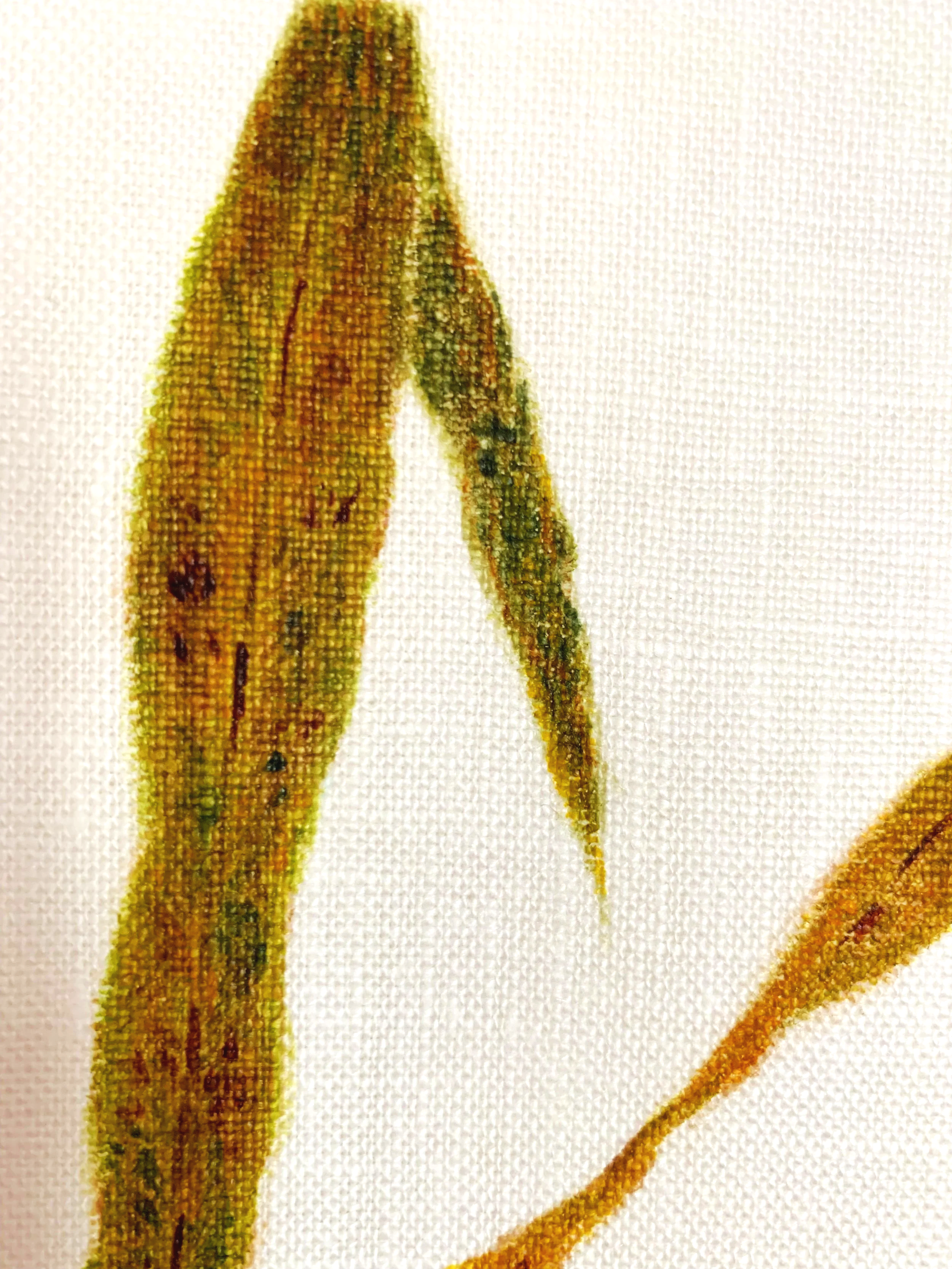
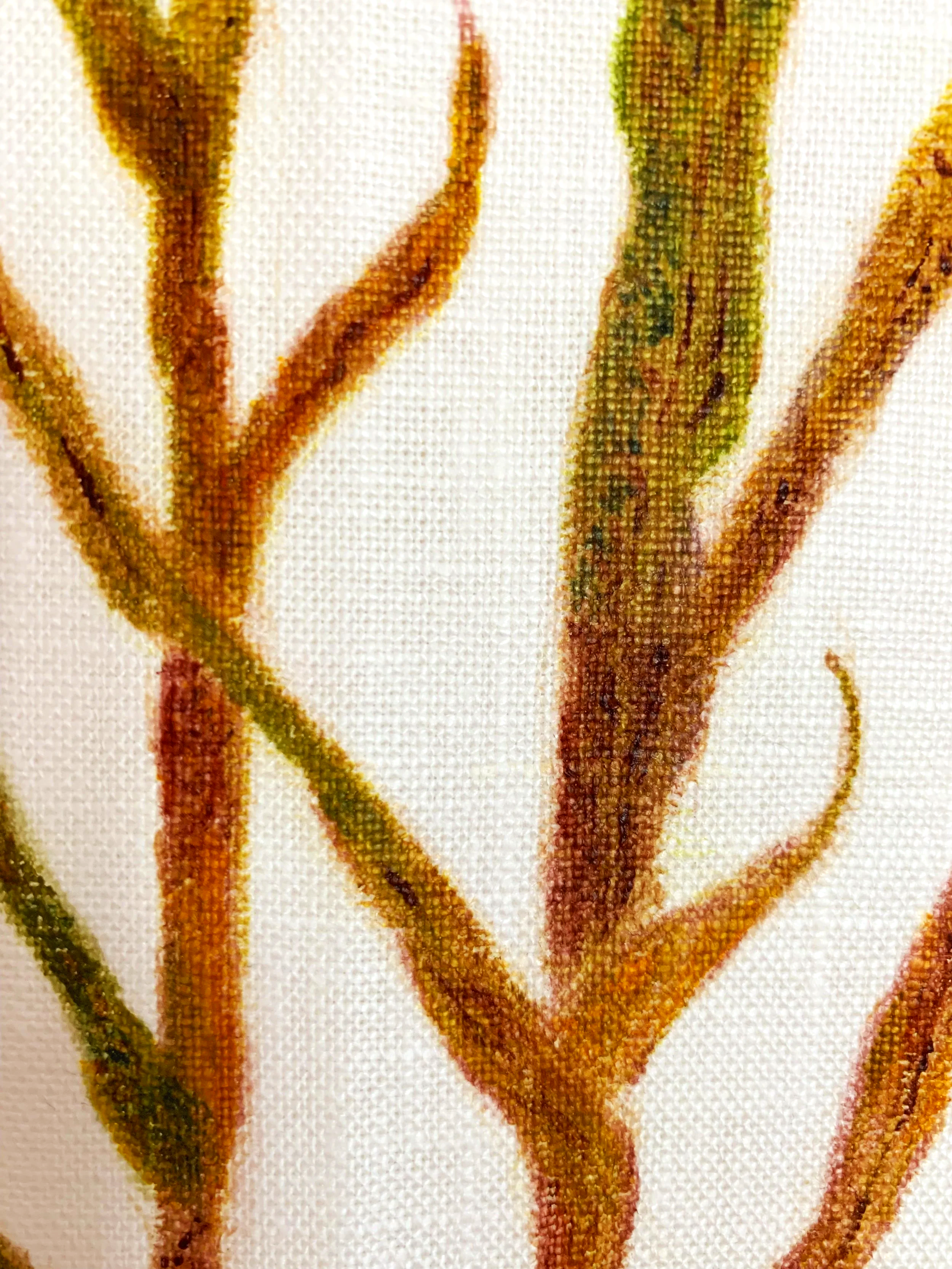
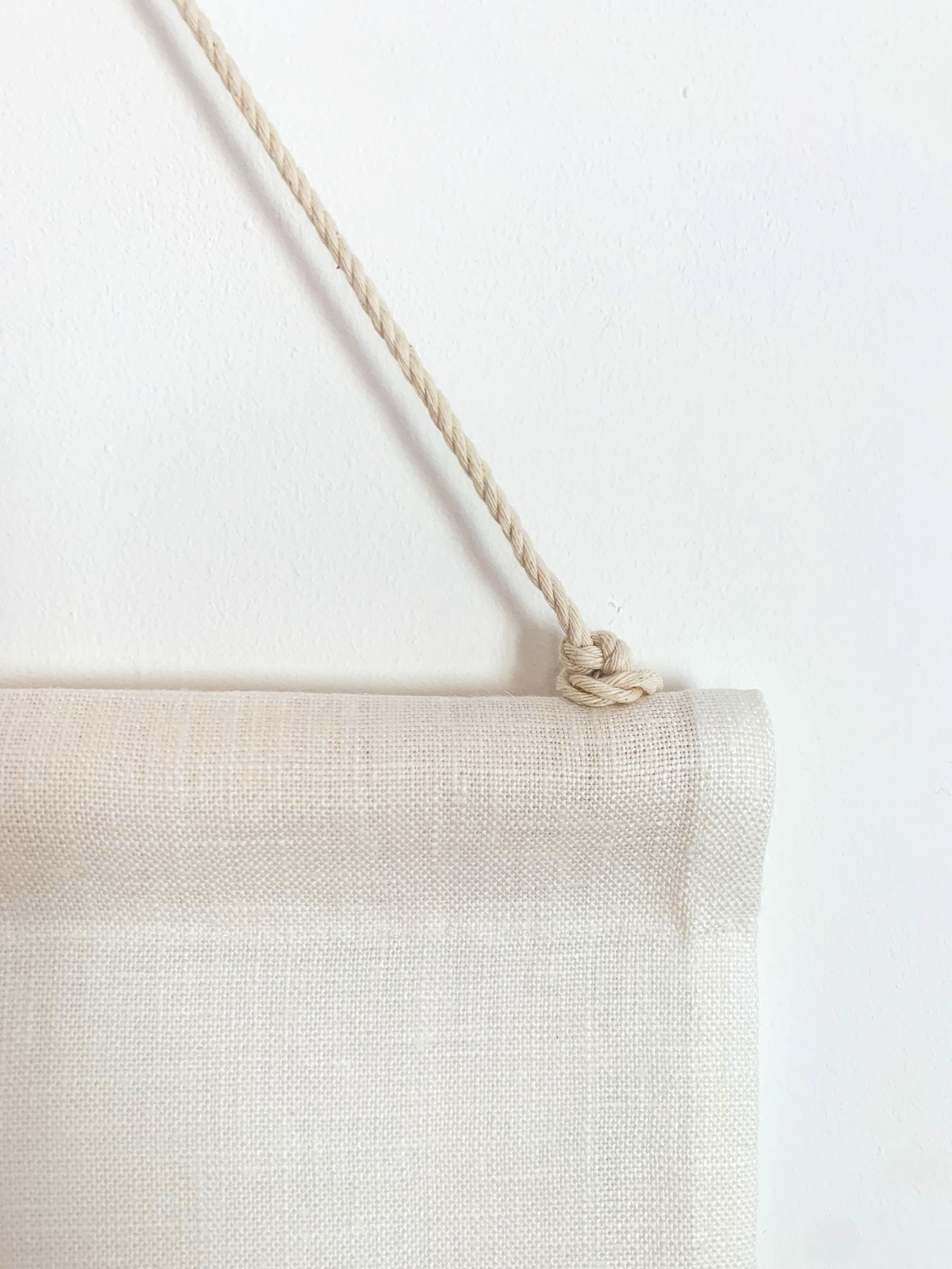
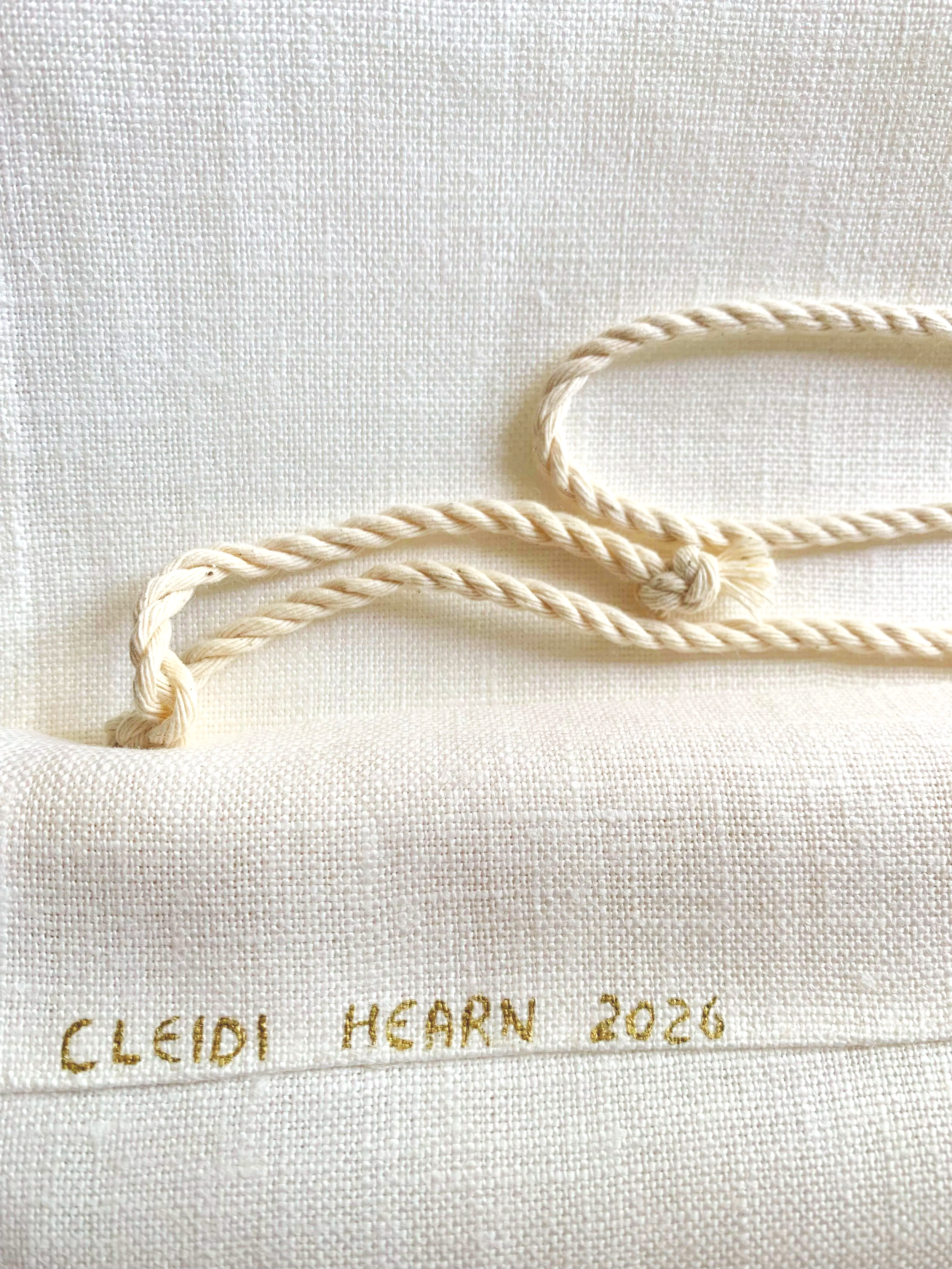
Each scroll is sewed and painted by hand on linen using multiple translucent layers of pigment. The brushwork accumulates slowly over time, allowing the image to surface gradually through the textile. The linen remains visible throughout the process. Light passes through thinner areas of pigment while denser passages retain a quieter opacity. This creates surfaces that feel weathered, atmospheric, and materially alive.
The vertical scroll format is central to the work. Suspended rather than stretched, the paintings occupy space with a quieter physical presence. They recall devotional banners, archival textiles, or suspended fragments preserved across time. Their proportions isolate each vegetal form within an open field of linen, allowing the plant to appear almost as a lingering imprint rather than a fixed image.
The restrained palette reflects the material world of cultivation itself. Oxidised yellows, softened greens, earthen browns, and faded vegetal tones evoke exposure, climate, harvest, and seasonal change. Colour operates slowly within the works. Nothing appears immediate or decorative. The surfaces carry a sense of duration and gradual transformation.
Repetition plays an important role within the practice but each individual work maintains its own rhythm and tonal structure. Plants recur across serial arrangements that echo agricultural cycles of planting, harvesting, and return.
Although grounded in specific agricultural histories, the works remain intentionally open. They do not illustrate historical events directly. Instead, histories remain embedded within the material language of the paintings themselves: repetition, erosion, fragility, accumulation, and absence.
The sugarcane scrolls series introduce the wider direction of Botanica Brasilis. Future works will continue this expanding archive through other cultivated plants, each approached as a carrier of ecological and cultural memory shaped through long histories of human cultivation.
For collectors, the series offer works that operate with both visual restraint and conceptual depth. The scrolls possess a calm architectural presence that shifts subtly with light and space. At the same time, they hold a broader reflection on memory, agriculture, displacement, and the enduring relationship between cultivated land and cultural identity.